
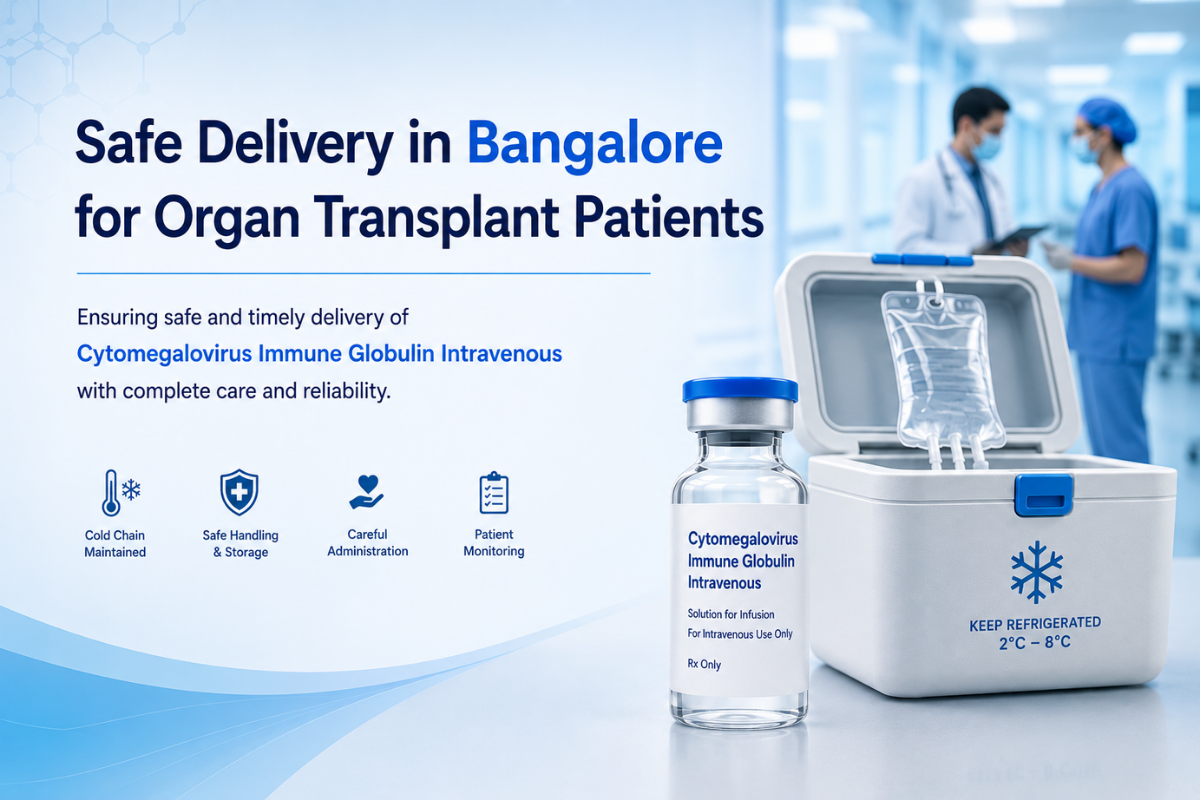
As a major healthcare hub, Bangalore hosts a number of transplant centers that provide advanced organ transplantation and long-term patient care. However, Cytomegalovirus (CMV) continues to pose a significant risk for transplant recipients, particularly those vulnerable to donor-derived infection. If left unmanaged, CMV can lead to serious complications, including graft dysfunction, increased hospitalization and reduced patient survival.
Cytogam (or Cytomegalovirus Immune Globulin Intravenous – Human) is a purified hyperimmune globulin enriched with antibodies against CMV and is indicated for the prevention of CMV disease in transplant recipients. When incorporated into a comprehensive CMV prophylaxis strategy, Cytogam has demonstrated significant clinical benefits by reducing the incidence of CMV disease and improving transplant outcomes.
However, the success of Cytogam therapy extends beyond its clinical efficacy. Safe delivery- from transportation and storage to patient administration and monitoring-is essential to ensure that every patient receives the therapy in its optimal condition while minimizing the risk of adverse events.
Maintaining the Cold Chain: Preserving Product Quality
As a plasma-derived medicine, Cytogam requires careful handling throughout the supply chain. Its effectiveness depends on maintaining appropriate storage conditions from the manufacturing facility to the hospital pharmacy and finally to the patient’s bedside. Cytogam should always be stored between 2°C and 8°C (36°F to 46°F) and used within the recommended timeframe after the vial has been entered. Hence, maintaining an uninterrupted cold chain is particularly important in India, where transportation distances and varying climatic conditions can pose logistical challenges.
The product is manufactured using carefully screened human plasma and undergoes an established solvent-detergent viral inactivation process designed to reduce the risk of transmitting lipid-enveloped viruses such as HIV, Hepatitis B and Hepatitis C. Although these manufacturing safeguards significantly enhance product safety, healthcare professionals should inspect every vial before administration. The solution should appear colorless, translucent and free from particulate matter. If the solution appears turbid or contains visible particles, it should not be administered.
Clinical Screening Before Administration
Patient evaluation before initiating Cytogam therapy is essential to reduce the risk of serious adverse reactions. One of the most important contraindications is selective Immunoglobulin A (IgA) deficiency in patients who have developed antibodies against IgA, as administration of immunoglobulin products in these individuals may trigger severe, potentially life-threatening anaphylactic reactions.
Special attention should also be given to patients who are at increased risk of renal impairment. Since Cytogam contains sucrose as a stabilizer, patients with pre-existing renal insufficiency, diabetes mellitus, advanced age, dehydration, sepsis or those receiving nephrotoxic medications require careful monitoring. Baseline renal function assessment, along with periodic evaluation of serum creatinine, blood urea nitrogen, and urine output, helps clinicians identify early signs of renal dysfunction and adjust treatment accordingly.
Safe Infusion Practices
The administration of Cytogam follows a carefully controlled infusion protocol designed to minimize infusion-related reactions while ensuring effective delivery of the therapy. Each vial should be entered only once using aseptic technique and the infusion should begin within six hours of opening the vial and be completed within twelve hours. These handling practices help preserve product quality and reduce the risk of contamination.
For transplant recipients, dosing schedules vary depending on the type of organ transplanted, with therapy typically initiated within 72 hours after transplantation and continued at scheduled intervals for up to sixteen weeks as clinically indicated. To improve patient tolerance, Cytogam is administered using an approach that requires continuous monitoring and consequent dosage change. Infusion begins at a low rate, which is increased stepwise only if the patient remains free from adverse reactions, with the maximum infusion rate not exceeding the recommended limit of 75 mL per hour. This controlled administration strategy significantly reduces the likelihood of infusion-related complications.
Patient Monitoring During Infusion
Continuous patient monitoring is an integral part of safe Cytogam administration. Vital signs should be assessed before the infusion begins, monitored during the infusion, evaluated after completion and reassessed whenever the infusion rate is increased. Close observation enables healthcare providers to promptly recognize and manage any adverse reactions that may occur during treatment.
Most infusion-related reactions reported during clinical studies have been mild and infrequent, occurring in fewer than six percent of infusions. Symptoms such as flushing, chills, fever, nausea, muscle cramps or back pain are generally associated with infusion speed and often resolve after slowing or temporarily interrupting the infusion.
Although serious complications are uncommon, transplant teams should remain prepared to manage conditions such as anaphylaxis, Transfusion-Related Acute Lung Injury (TRALI), and thrombotic events. Emergency medications, including epinephrine and diphenhydramine, should always be readily available to ensure rapid intervention if severe hypersensitivity reactions occur.
Clinical Benefits of Cytogam in Transplant Care
Clinical evidence has consistently demonstrated the value of Cytogam in reducing CMV-related complications following organ transplantation. Studies have shown approximately a 50% reduction in primary CMV disease among renal transplant recipients, while liver transplant recipients have experienced significant reductions in serious cases of CMV disease and improved overall survival when Cytogam was incorporated into prophylactic treatment strategies. These findings underscore the importance of Cytogam as a key component of CMV prevention in high-risk transplant patients.
As the number of organ transplant procedures continues to grow across India, ensuring the safe delivery of Cytogam remains essential for maximizing its therapeutic benefits. Effective cold-chain management, thorough patient screening, standardized infusion protocols, and vigilant clinical monitoring collectively contribute to safer administration and improved patient outcomes. By adhering to these evidence-based practices, transplant centers can strengthen CMV prevention strategies and help protect transplant recipients from avoidable post-operative complications, ultimately supporting the long-term success of life-saving organ transplantation. For patients and healthcare providers seeking access to Cytogam (CMVIG) in India, 24/7QualityMeds supports compliant import pathways, cold-chain logistics and medicine procurement assistance.