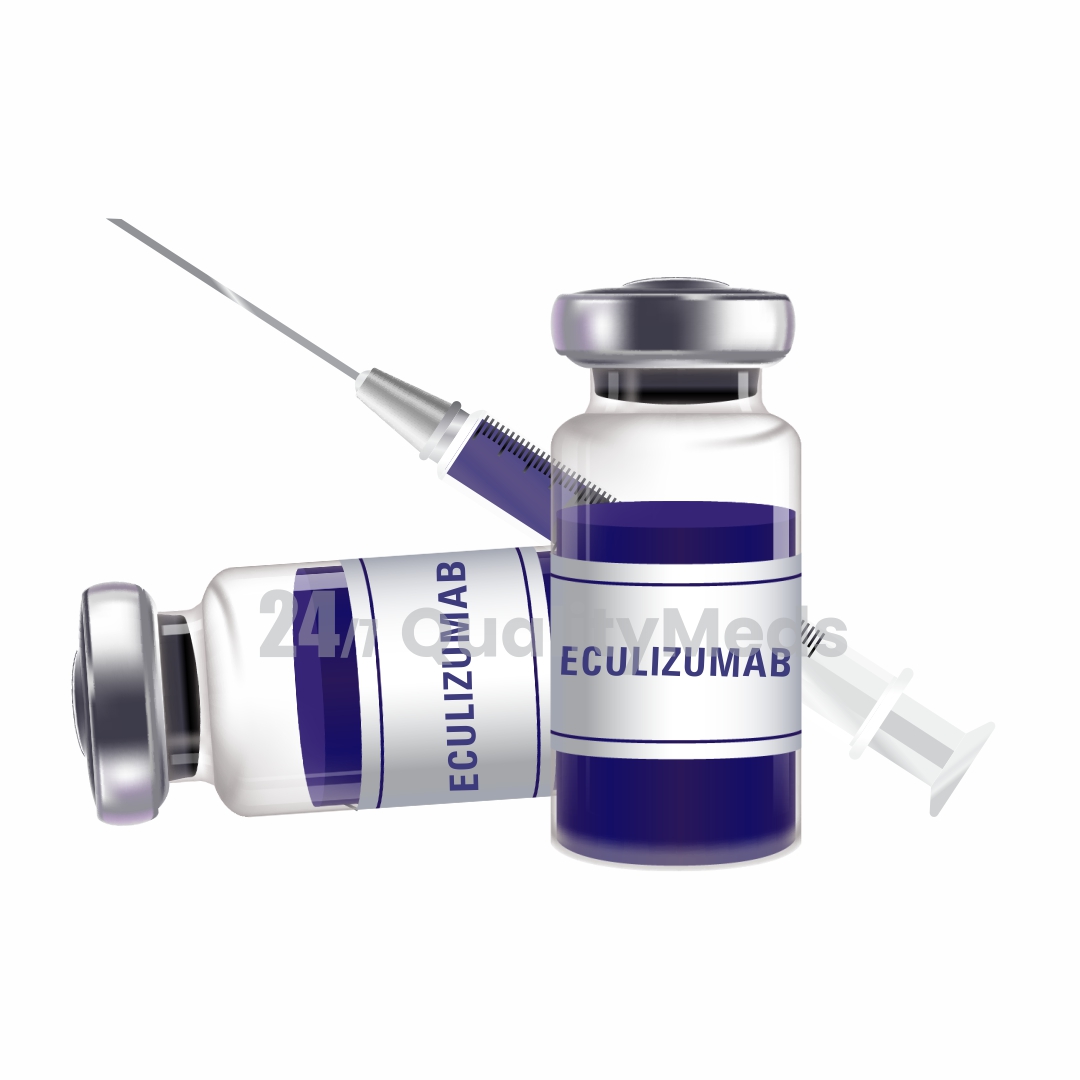
Soliris is indicated for the treatment of paroxysmal nocturnal hemoglobinuria (PNH) to reduce hemolysis and for the treatment of patients with atypical hemolytic uremic syndrome (aHUS) to inhibit complement-mediated thrombotic microangiopathy.
- Paroxysmal Nocturnal Hemoglobinuria (PNH): It is a rare acquired disorder which is characterized by premature destruction of red blood cells (hemolysis) and also lack of some protein molecules on the surface of the cells.
- Atypical Hemolytic Uremic Syndrome (aHUS): It is a rare, progressive a life-threatening disorder which is characterized by the hemolytic anemia, thrombocytopenia and kidney failure.
STRENGTH: Soliris for Injection is available as 300mg single use vial each containing 30ml of 10 mg/mL solution.
Dosage: Recommended dosage regimen
PNH for patients 18 years of age and older, Soliris therapy consists of:
| DOSAGE |
INDUCTION |
| 600 mg |
First 4 weeks |
| 900 mg |
5th dose 1 week later |
| 900 mg |
Every 2 weeks thereafter |
aHUS for patients 18 years of age and older, Soliris therapy consists of:
| DOSAGE |
INDUCTION |
| 900mg |
First 4 weeks |
| 1200mg |
5th dose 1 week later |
| 1200mg |
Every 2 weeks thereafter |
For patients less than 18 years of age, administer Soliris based upon body weight, according to following schedule
Recommended dosage regimen:
| Patients body weight |
Induction |
Maintenance |
| 40kg and over |
900mg weekly x 4 doses |
1200mg at week 5; then 1200mg every 2 weeks |
| 30kg to less than 40kg |
600mg weekly x 2 doses |
900mg at week 3; then 900mg every 2 weeks |
| 20kg to less than 30kg |
600mg weekly x 2 doses |
600mg at week 3; then 600mg every 2 weeks |
| 10 kg to less than 20kg |
600mg weekly x 1 dose |
300mg at week 2; then 300mg every 2 weeks |
| 5kg to less than 10kg |
300mg weekly x 1 dose |
300mg at week 2; then 300mg every 3 weeks |
Adverse Reactions:
- Hypertension
- Upper respiratory tract infection
- Urinary Tract infection
- Anemia
Storage:
- Soliris vials should be kept in their original carton under refrigerated conditions at 2–8°C (36–46°F) and protected from light until they are used.
Serious Meningococcal Infections:
Soliris increases the risk of serious meningococcal infections, including septicemia and meningitis. Life-threatening and fatal cases have been reported in patients receiving the treatment with Soliris. Patients who have not previously received a meningococcal vaccine should be vaccinated at least two weeks before starting Soliris treatment. If immediate Soliris therapy is necessary, the meningococcal vaccine should be given as soon as possible.
Soliris REMS (RISK EVALUATION AND MITIGATION STRATEGIES):
Prescribers are required to inform patients about the risk of meningococcal infection, provide them with the REMS educational materials, and ensure they receive a meningococcal vaccination.
Other Infections:
Soliris inhibits terminal complement activation, which can increase a patient’s vulnerability to infections, particularly those caused by encapsulated bacteria. Children receiving Soliris may face a heightened risk of serious infections from Streptococcus pneumoniae and Haemophilus influenzae type b (Hib). To reduce this risk, appropriate vaccinations against Streptococcus pneumoniae and Hib should be administered.
Contraindications:
Soliris is contraindicated in the following cases:
-
Patients with an active, unresolved Neisseria meningitidis infection
-
Patients who have not been vaccinated against Neisseria meningitidis, unless the potential harm of postponing Soliris treatment is greater than the risk of developing a meningococcal infection