When Rinvoq & Rinvoq LQ (upadacitinib) inhibits JAK1, the STAT proteins are not activated, inflammatory genes are expressed in small quantities, cytokine signaling decreases and immune response becomes less aggressive. This helps to control inflammation and reduces the harmful effects on other pathways.
Upadacitinib
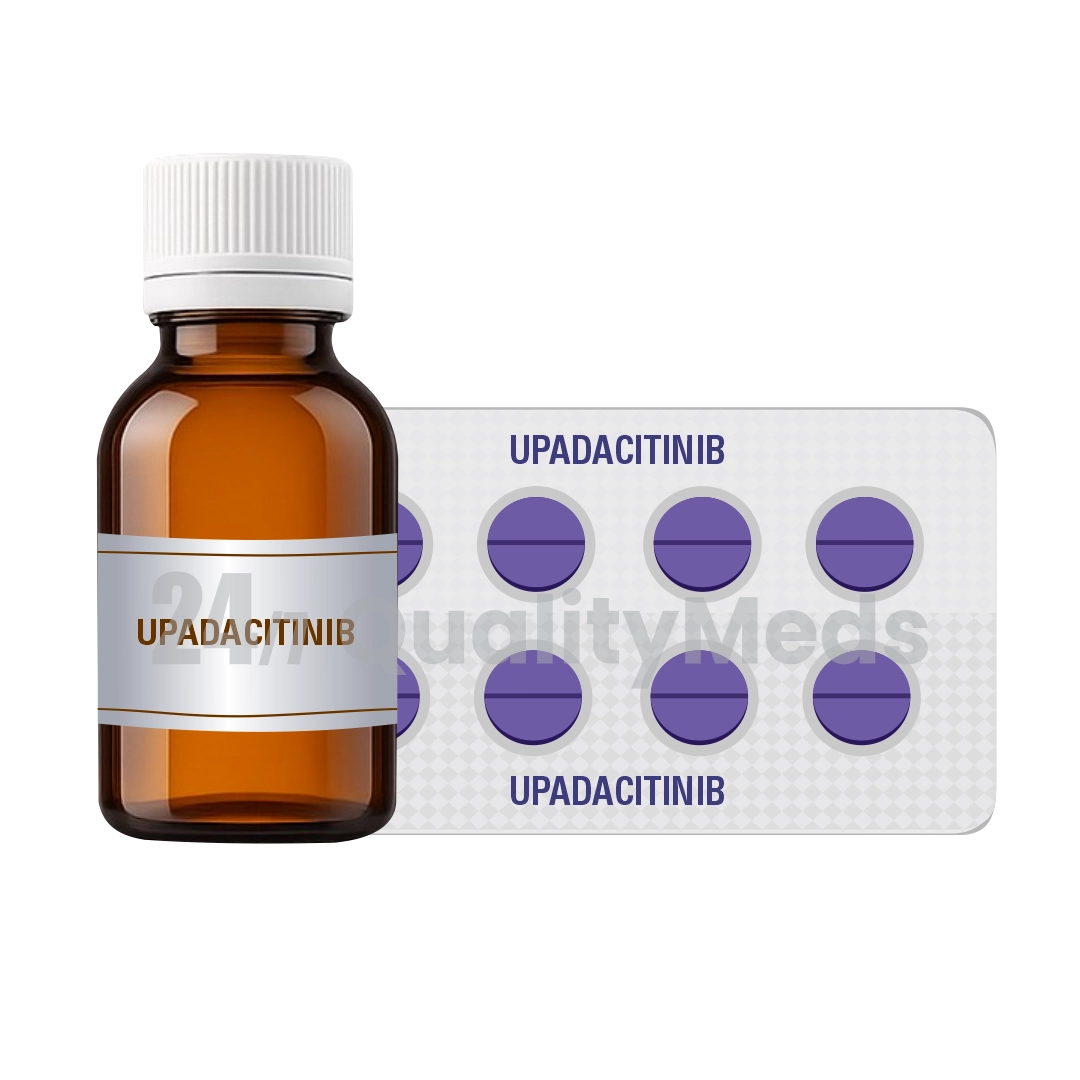
Generic Name/API:Upadacitinib
Packaging:Rinvoq extended-release tablets: Each bottle contains 30 tablets or 28 tablets. Rinvoq LQ oral solution: Each bottle contains a labeled volume of 180 mL of clear, colorless to light yellow solution. The bottle is packaged in a carton with one press-in bottle adapter and one 10 mL oral dosing syringe.
Storage:Rinvoq extended-release tablets: Store in the refrigerator at 2°C to 25°C (36°F to 77°F). Rinvoq LQ oral solution: Store between 2°C to 30°C (36°F to 86°F).
Dosage:For dosage information, please check the General Information section.
Strength:Rinvoq extended-release tablets: 15 mg, 30 mg, and 45 mg Rinvoq LQ oral solution: 1 mg/mL
Indication:Upadacitinib is a bispecific CD20-directed CD3 T-cell engager indicated for the treatment of adult patients with relapsed or refractory diffuse large B-cell lymphoma (DLBCL) and in relapsed or refractory follicular lymphoma (FL).
Rinvoq/Rinvoq LQ (upadacitinib) is a Janus kinase (JAK) inhibitor indicated for the following cases:
- Treatment of adults with moderately to severely active rheumatoid arthritis who have had an inadequate response or intolerance to one or more TNF blockers.
- Treatment of adults and pediatric patients 2 years of age and older with active psoriatic arthritis who have had an inadequate response or intolerance to one or more TNF blockers.
- Treatment of adults and pediatric patients 12 years of age and older with refractory, moderate to severe atopic dermatitis whose disease is not adequately controlled with other systemic drug products, including biologics, or when use of those therapies are inadvisable.
- Treatment of adults with moderately to severely active ulcerative colitis (UC) who have had an inadequate response or intolerance to one or more TNF blockers. If TNF blockers are clinically inadvisable, patients should have received at least one approved systemic therapy prior to use of Rinvoq.
- Treatment of adults with moderately to severely active Crohn’s disease (CD) who have had an inadequate response or intolerance to one or more TNF blockers. If TNF blockers are clinically inadvisable, patients should have received at least one approved systemic therapy prior to use of RINVOQ.
- Treatment of adults with active ankylosing spondylitis who have had an inadequate response or intolerance to one or more TNF blockers.
- Treatment of adults with active nonradiographic axial spondyloarthritis with objective signs of inflammation who have had an inadequate response or intolerance to TNF blocker therapy.
- Treatment of patients 2 years of age and older with active polyarticular juvenile idiopathic arthritis who have had an inadequate response or intolerance to one or more TNF blockers.
- Treatment of adults with giant cell arteritis.
Dosage and Strength:
- Rinvoq extended-release tablets: 15 mg, 30 mg, and 45 mg
- Rinvoq LQ oral solution: 1 mg/mL
Adverse Effects:
- Rheumatoid arthritis, psoriatic arthritis, ankylosing spondylitis, and nonradiographic axial spondyloarthritis: Upper respiratory tract infections, herpes zoster, herpes simplex, bronchitis, nausea, cough, pyrexia, acne, and headache.
- Giant cell arteritis: Upper respiratory tract infections, headache, fatigue, peripheral edema, cough, anemia, rash, herpes zoster, and nausea.
- Atopic dermatitis: Upper respiratory tract infections, acne, herpes simplex, headache, blood creatine phosphokinase increased, cough, hypersensitivity, folliculitis, nausea, abdominal pain, pyrexia, increased weight, herpes zoster, influenza, fatigue, neutropenia, myalgia, and influenza like illness.
- Ulcerative colitis: Upper respiratory tract infections, increased blood creatine phosphokinase, acne, neutropenia, elevated liver enzymes, pyrexia, and rash.
- Crohn’s disease: Upper respiratory tract infections, anemia, pyrexia, acne, herpes zoster, and headache.
Storage:
- Rinvoq extended-release tablets: Store in the refrigerator at 2°C to 25°C (36°F to 77°F). Store in the original bottle in order to protect from moisture.
- Rinvoq LQ oral solution: Store between 2°C to 30°C (36°F to 86°F). Discard remaining oral solution 60 days after opening the bottle.
- Serious Infections:
Serious infections, including pneumonia and cellulitis, may occur while taking Rinvoq. Evaluate patients for latent and active tuberculosis (TB) before initiating treatment and monitor for signs and symptoms of TB during therapy, including in patients who previously tested negative for latent TB. Viral reactivation, including herpes virus (e.g., herpes zoster) and hepatitis B virus, may also occur. - Mortality:
In patients aged 50 years and older with at least one cardiovascular risk factor, treatment with JAK inhibitors has been associated with a higher rate of all-cause mortality, including sudden cardiovascular death. - Malignancy and Lymphoproliferative Disorders:
Malignancies, including lymphomas, have been reported in patients receiving Rinvoq. Assess the risks and benefits in patients with a history of malignancy (other than successfully treated non-melanoma skin cancer), those who develop malignancy during treatment, and current or former smokers. Cases of non-melanoma skin cancer (NMSC) have also been reported. - Major Adverse Cardiovascular Events (MACE):
Major adverse cardiovascular events, including cardiovascular death, non-fatal myocardial infarction (MI), and non-fatal stroke, may occur in patients treated with Rinvoq. - Thrombosis:
Thrombotic events, including deep vein thrombosis (DVT), pulmonary embolism (PE), and arterial thrombosis, have been observed in patients receiving Rinvoq. - Hypersensitivity Reactions:
Serious hypersensitivity reactions, including anaphylaxis and angioedema, have been reported in patients treated with Rinvoq. - Gastrointestinal Perforations:
Gastrointestinal perforations may occur during treatment with Rinvoq. Monitor patients who are at increased risk, including those with a history of diverticulitis or those receiving concomitant NSAIDs or corticosteroids. - Laboratory Abnormalities
Treatment with Rinvoq may lead to laboratory abnormalities, including neutropenia, anemia, lymphopenia, and elevated liver enzymes. Increases in lipid parameters, including total cholesterol, LDL cholesterol, and HDL cholesterol, may also occur.
FAQ
When is Rinvoq used?
Rinvoq & Rinvoq LQ (upadacitinib) is a prescription medicine used to treat several chronic inflammatory and autoimmune conditions, including rheumatoid arthritis, psoriatic arthritis, atopic dermatitis (eczema), ulcerative colitis, Crohn’s disease, ankylosing spondylitis, non-radiographic axial spondyloarthritis, polyarticular juvenile idiopathic arthritis (pJIA), and giant cell arteritis. It is typically prescribed when previous treatments, including TNF blockers or other systemic therapies, have not worked well, were not tolerated, or are not considered suitable by a healthcare provider.
What are the ingredients in Rinvoq 45 mg tablets?
The active ingredient is upadactinib and the inactive ingredients are colloidal silicon dioxide, hypromellose, iron oxide yellow and iron oxide red, magnesium stearate, mannitol, microcrystalline cellulose, polyvinyl alcohol, polyethylene glycol, talc, tartaric acid and titanium dioxide.
What dietary restrictions should I make while taking Rinvoq?
Avoid food or drink containing grapefruit during treatment with Rinvoq/Rinvoq LQ because eating grapefruit or drinking grapefruit juice may increase the risk of side effects.
What is the method of taking Rinvoq tablets and Rinvoq oral solution?
Take Rinvoq LQ 2 times a day with or without food.
Take Rinvoq tablets 1 time a day with or without food.
Swallow Rinvoq tablets whole. Do not split, crush, or chew the tablets. Rinvoq LQ is not the same as RINVOQ tablets. Do not switch between RINVOQ LQ and RINVOQ tablets unless the change has been made by your healthcare provider.
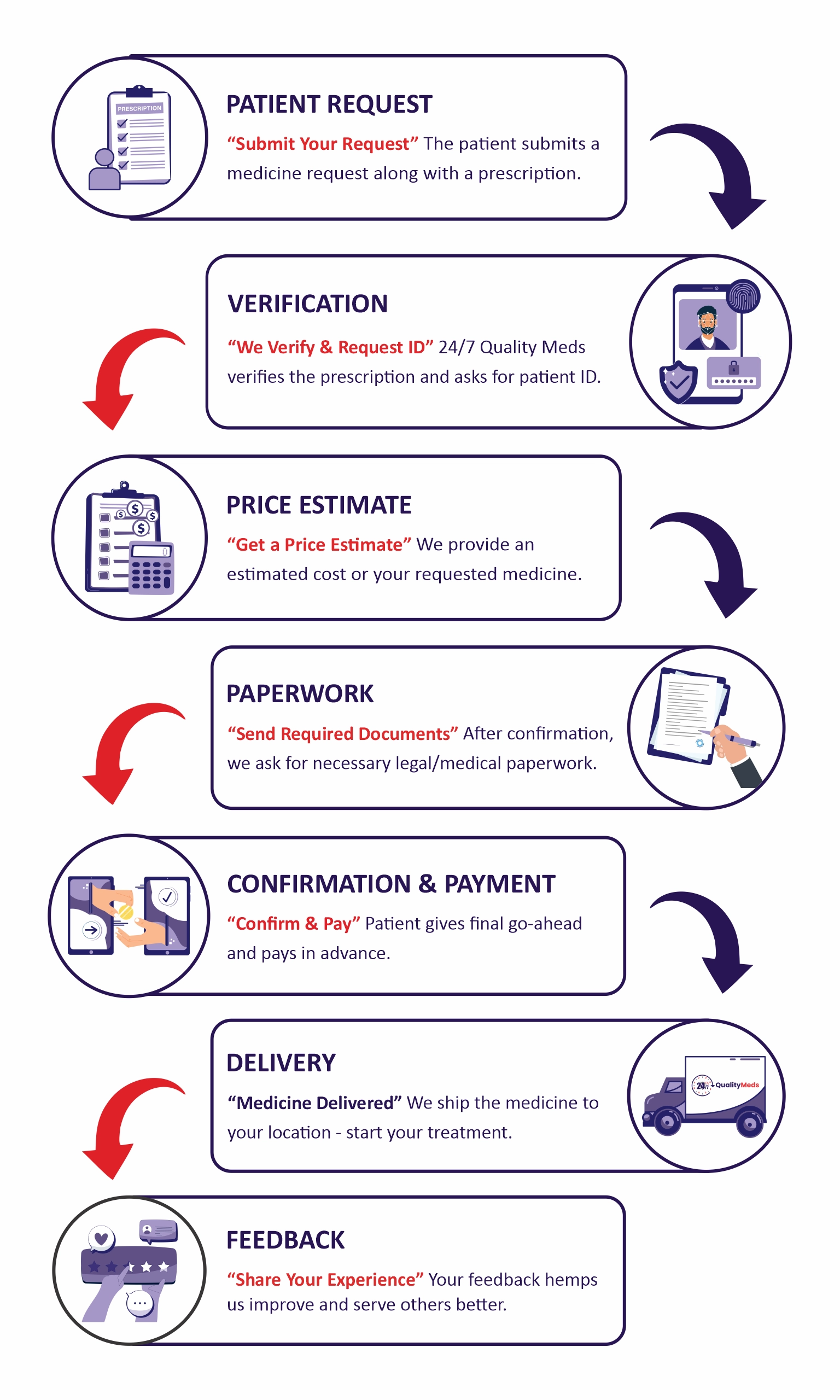
What is the cost of Rinvoq (upadacitinib) online in India?
The cost of Rinvoq / Rinvoq LQ (upadacitinib) is not constant as it’s not approved in India and must be imported. Different parameters such as international currency exchange rates (USD/EUR), import duties and supplier availability determines the final price. For the latest pricing and details, contact 24/7QualityMeds at +91 9967979080.
How to buy Rinvoq/Rinvoq LQ (upadacitinib) online in India?
You can directly connect with us at 24/7QualityMeds to buy Rinvoq/Rinvoq LQ (upadacitinib) online in India at a genuine price. We assist you in importing this medication legally and at the best possible cost.
How to buy upadacitinib (Rinvoq / Rinvoq LQ) in Delhi?
To buy upadacitinib (Rinvoq / Rinvoq LQ) in Delhi, begin by contacting 24/7QualityMeds. Our team coordinates prescription verification, import documentation, verified global sourcing and compliant delivery.
Where can I buy upadacitinib (Rinvoq / Rinvoq LQ) in Mumbai?
Buy upadacitinib (Rinvoq / Rinvoq LQ) in Mumbai through 24/7QualityMeds by enquiring about the required formulation, current availability, sourcing or procurement options. Supply is subject to a valid prescription and applicable requirements.