Cellcept (Mycophenolate mofetil) is a prescription medicine to prevent rejection (antirejection medicine) in people who have received a kidney, heart or liver transplant. Rejection is when the body’s immune system perceives the new organ as a “foreign” threat and attacks it. It is used with other medicines containing cyclosporine and corticosteroids.
Mycophenolate Mofetil
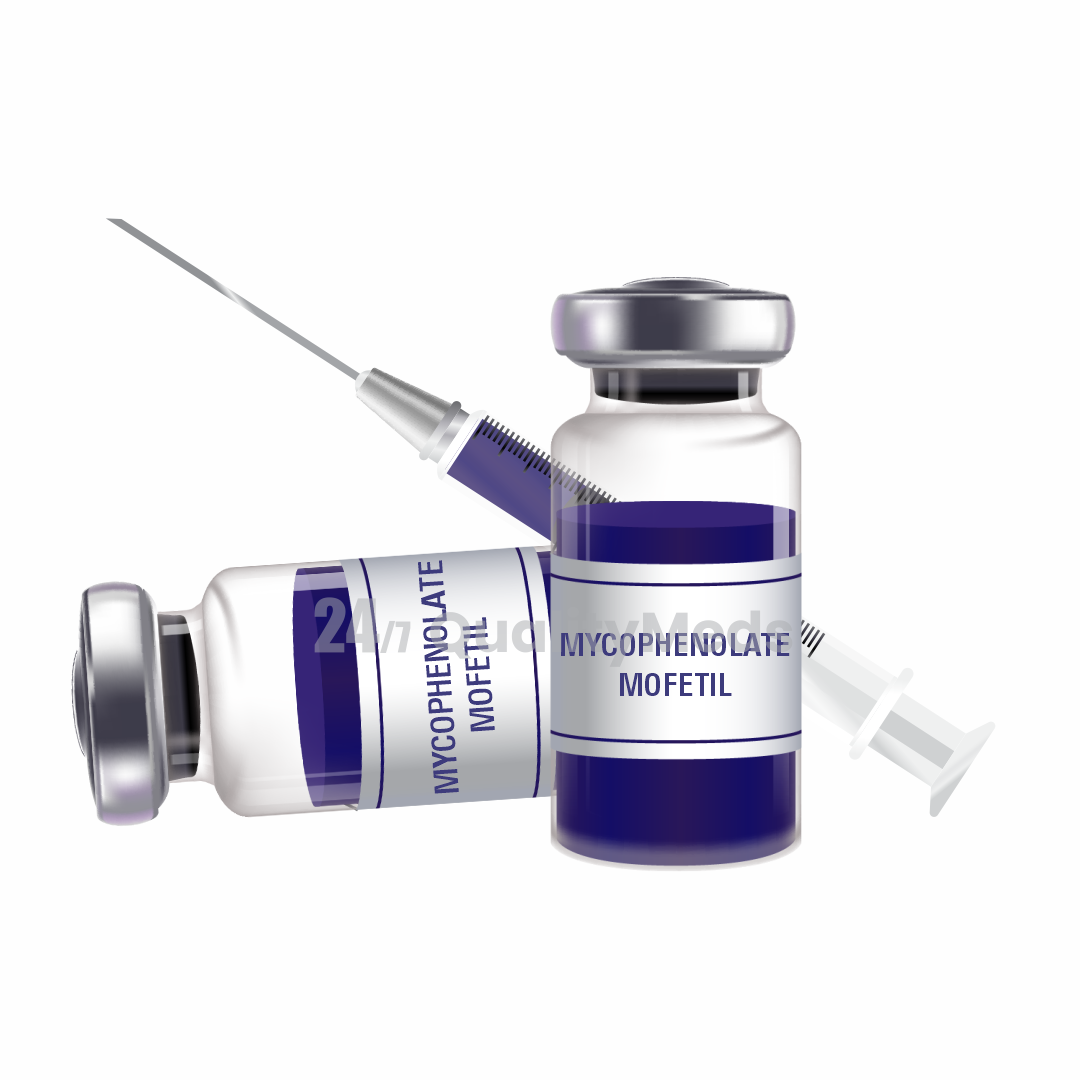
Generic Name/API:Mycophenolate Mofetil
Packaging:Injection: 500 mg mycophenolate mofetil in a 20 mL sterile single-dose vial cartons of 4 vials.
Storage:Store powder and reconstituted infusion solution at 25°C (77°F); excursions permitted to 15°C to 30°C (59°F to 86°F).
Dosage:For dosage information, please visit the General Information section.
Strength:500 mg mycophenolate mofetil in a single-dose vial for reconstitution.
Indication:Cellcept is an antimetabolite immunosuppressant indicated for the prophylaxis of organ rejection in adult and pediatric recipients 3 months of age and older of allogeneic kidney, heart or liver transplants, in combination with other immunosuppressants.
CellCept is an antimetabolite immunosuppressant indicated for:
- Prophylaxis of organ rejection in adult and pediatric patients aged 3 months and older receiving allogeneic kidney, heart, or liver transplants, when used in combination with other immunosuppressive agents.
Strength:
For Injection: 500 mg mycophenolate mofetil in a single-dose vial for reconstitution.
Dosage:
| ADULTS | DOSAGE |
| Kidney Transplant | 1 g twice daily, orally or intravenously (IV) over no less than 2 h |
| Heart Transplant | 1.5 g twice daily orally or IV, over no less than 2 h |
| Liver Transplant | 1.5 g twice daily orally or 1g twice daily IV over no less than 2 h |
| PEDIATRICS | DOSAGE |
| Kidney Transplant | 600 mg/m2 orally twice daily, up to maximum of 2 g daily |
| Heart Transplant | 600 mg/m2 orally twice daily (starting dose) up to a maximum of 900 mg/m2 twice daily (3 g or 15 mL of oral suspension) |
| Liver Transplant | 600 mg/m2 orally twice daily (starting dose) up to a maximum of 900 mg/m2 twice daily (3 g or 15 mL of oral suspension) |
Adverse effects
- Diarrhea
- Leukopenia
- Infection, vomiting
- Higher frequency of certain types of infections
Storage:
Injection: Store powder and reconstituted infusion solution at 25°C (77°F); excursions permitted to 15°C to 30°C (59°F to 86°F).
- Embryofetal Toxicity
Use of MMF during pregnancy is associated with an increased risk of first trimester pregnancy loss and an increased risk of congenital malformations, especially external ear and other facial abnormalities including cleft lip and palate, and anomalies of the distal limbs, heart, esophagus, kidney and nervous system. Counsel for pregnancy prevention. You can avoid the usage of MMF if safer treatment options are available.
- Lymphoma and Other Malignancies
Cellcept has the potential of developing lymphomas and other malignancies, especially of the skin. These patients are advised to wear protective clothing and use a broad-spectrum sunscreen with a high protection factor in order to reduce sunlight and UV light exposure. Post-transplant lymphoproliferative disorder (PTLD) may occur rarely who are EBV seronegative, especially in young children.
- Serious infections
Patients receiving Cellcept have a high risk of developing bacterial, fungal, protozoal and new or reactivated viral infections, including opportunistic infections. These infections may lead to serious outcomes, including hospitalizations and death.
Serious viral infections reported include:
-
- Polyomavirus-associated nephropathy (PVAN), especially due to BK virus infection
- JC virus-associated progressive multifocal leukoencephalopathy (PML)
- Cytomegalovirus (CMV) infections: CMV seronegative transplant patients who receive an organ from a CMV seropositive donor are at highest risk of CMV viremia and CMV disease.
- Viral reactivation in patients infected with Hepatitis B and C
- COVID-19
It is advised to either reduce or discontinue the medication according to the condition.
- Blood Dyscrasias: Neutropenia and Pure Red Cell Aplasia (PRCA)
Severe neutropenia has been observed in patients taking Cellcept. The dosage should be interrupted or reduced, appropriate diagnostic tests performed, and the patient managed appropriately. Consider monitoring with complete blood counts weekly for the first month, twice monthly for the second and third months, and monthly for the remainder of the first year.
Patients are also developing pure red cell aplasia (PRCA) when treated in combination with other immunosuppressive agents. In some cases, PRCA was found to be reversible with dose reduction or cessation of CELLCEPT therapy.
- Gastrointestinal complications
Symptoms like Gastrointestinal bleeding requiring hospitalization, ulceration and perforations were observed in clinical trials.
- Patients with Hypoxanthine-Guanine Phosphoribosyl-Transferase Deficiency (HGPRT)
Cellcept should be avoided in patients with hereditary deficiencies of hypoxanthine-guanine phosphoribosyl-transferase (HGPRT) such as Lesch-Nyhan and Kelley-Seegmiller syndromes because it may cause an exacerbation of disease symptoms characterized by the overproduction and accumulation of uric acid leading to symptoms associated with gout such as acute arthritis, tophi, nephrolithiasis or urolithiasis and renal disease including renal failure.
- Acute Inflammatory Syndrome (AIS) Associated with Mycophenolate Products
The use of MMF and Mycophenolate Products may cause AIS which is paradoxical pro-inflammatory reaction characterized by fever, arthralgias, arthritis, muscle pain and elevated inflammatory markers including, C-reactive protein and erythrocyte sedimentation rate, without evidence of infection or underlying disease recurrence. Discontinue treatment and consider other treatment alternatives based on the risk and benefit for the patient.
- Hypersensitivity Reactions
Symptoms of hypersensitivity reactions such as angioedema and anaphylaxis, have been reported. Discontinue CELLCEPT; treat and monitor until symptoms resolve
- Immunizations
The use of live attenuated vaccines should be avoided (e.g., intranasal influenza, measles, mumps, rubella, oral polio, BCG, yellow fever, varicella, and TY21a typhoid vaccines) and patients should be advised that vaccinations may be less effective.
- Local Reactions with Rapid Intravenous Administration
Avoid administration of Cellcept intravenously by rapid or bolus injection as it may cause phlebitis and thrombosis.
- Risks in Patients with Phenylketonuria
CELLCEPT Oral Suspension contains aspartame, a source of phenylalanine that is harmful to phenylketonuria. Consider the combined daily amount of phenylalanine from all sources, including Cellcept before prescribing it in oral Suspension form to a patient with PKU.
- Blood Donation
Patients should not donate blood for at least 6 weeks following discontinuation of medication because their blood or blood products might be administered to a female of reproductive potential or a pregnant woman.
- Semen Donation
Men should not donate semen during therapy and for 90 days following discontinuation of medication.
- Effect of Concomitant Medications on Mycophenolic Acid Concentrations
Several medications can affect the levels of mycophenolic acid (MPA) in your body when taken with CellCept. Monitor and adjust MPA levels if other medicines are started, stopped, or changed.
- Potential Impairment of Ability to Drive or Operate Machinery
Patients should avoid driving or using machines if they experience somnolence, confusion, dizziness, tremor, or hypotension during treatment
FAQ
What happens to your body when you take Mycophenolate Mofetil (CellCept)?
It calms an overactive immune system and slows the growth of immune cells (T cells and B cells) that would otherwise attack a transplanted organ or mistakenly attack the body’s own tissues in autoimmune diseases. This leads to protection of the transplanted organ and reduces inflammation caused by the immune system.
When should I report to the doctor immediately?
Call your doctor immediately when notice the symptoms such as temperature of 100.5°F or greater, pain during urination, cold symptoms such as a runny nose or sore throat, white patches in the mouth or throat, unexpected bruising or bleeding, flu symptoms, such as an upset stomach, stomach pain, vomiting or diarrhea, cuts, scrapes or incisions that are red, warm and oozing pus, earache or headache.
Who should avoid taking this medicine?
Patients who have a history of allergic reactions to mycophenolate mofetil or any of the ingredients in Cellcept.
What are the precautions I should take while I’m on medication?
- Avoid becoming pregnant.
- Limit the amount of time you spend in sunlight. Avoid using tanning beds or sunlamps.
- Wear protective clothing when you are in the sun and use a broad-spectrum sunscreen with a high protection factor. This is especially important if your skin is very fair or if you have a family history of skin cancer.
- You should not donate blood for at least 6 weeks after stopping the medication.
- You should not donate sperm for 90 days after stopping the medication.
- Avoid driving and operating machineries
What is the price of Mycophenolate Mofetil (CellCept) Injection in India?
The price of Mycophenolate Mofetil (CellCept) Injection in India may vary depending on product availability, import-related costs, and applicable regulatory requirements. For the latest pricing details and availability, please contact 24/7 QualityMeds at +919967979080.
How to buy Mycophenolate Mofetil (CellCept) Injection in Delhi?
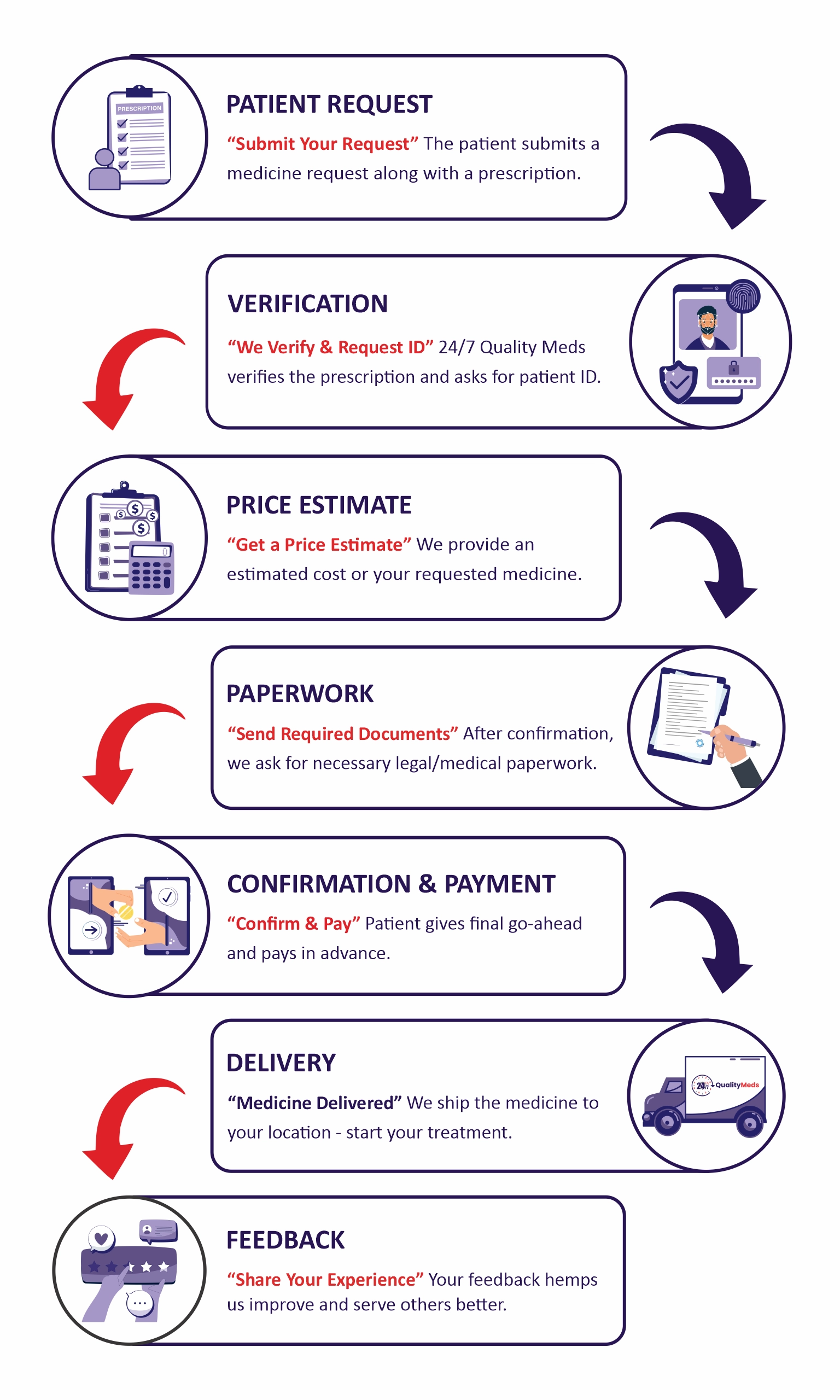
To buy Mycophenolate mofetil (CellCept) Injection in Delhi, a valid prescription from a registered healthcare practitioner is required. 24/7 QualityMeds assists with prescription verification, medicine availability, and delivery in accordance with applicable regulations.
How can I buy Mycophenolate mofetil (CellCept) Injection online in India?
To buy Mycophenolate mofetil (CellCept) Injection online in India, a valid prescription and applicable documentation are required. 24/7 QualityMeds assists with prescription verification, medicine procurement, and delivery in compliance with applicable regulatory requirements.
Where can I buy mycophenolate mofetil (Cellcept) in Mumbai?
For a genuine source to buy mycophenolate mofetil (Cellcept) in Mumbai, 24/7QualityMeds supports the full import process and delivers the medication securely to the patient.