Krazati is a prescription targeted therapy containing adagrasib. It works by blocking the abnormal KRAS G12C protein, which can contribute to cancer cell growth. The current US prescribing information indicates Krazati as a single-agent treatment for adults with KRAS G12C-mutated locally advanced or metastatic non-small cell lung cancer (NSCLC) who have received at least one prior systemic therapy.
Adagrasib
Generic Name/API:Adagrasib
Packaging:Bottle of 180 tablets
Storage:Store at 20°C to 25°C.
Dosage:The recommended dosage as a single agent for Non-Small Cell Lung Cancer (NSCLC) and in combination with cetuximab for Colorectal Cancer (CRC): 600 mg orally twice daily.
Strength:200 mg Tablets
Indication:Krazati is a targeted therapy used for treating adults with Non-Small Cell Lung Cancer (NSCLC) and Colorectal Cancer (CRC) with an abnormal KRAS G12C gene. Adagrasib in Krazati binds to the altered protein (the abnormal KRAS G12C gene) in cancer cells and inhibits cancer growth.
Krazati (Adagrasib) is an inhibitor of the RAS GTPase family indicated for:
Non-small cell lung cancer (NSCLC)
- As a single agent, for the treatment of adult patients with KRAS G12C-mutated locally advanced or metastatic NSCLC, as detected by an FDA-approved test, who have received at least one prior systemic therapy.
Colorectal cancer (CRC)
- In combination with cetuximab, for the treatment of adult patients with KRAS G12C-mutated locally advanced or metastatic CRC, as determined by an FDA-approved test, who have received prior treatment with fluoropyrimidine-, oxaliplatin-, and irinotecan-based chemotherapy.
These indications are approved under accelerated approval based on objective response rate (ORR) and duration of response (DOR). Continued approval for these indications may be contingent upon verification and description of a clinical benefit in confirmatory trials.
Strength:
Tablets: 200 mg.
Dosage:
The recommended dosage as a single agent for Non-Small Cell Lung Cancer (NSCLC) and in combination with cetuximab for Colorectal Cancer (CRC): 600 mg orally twice daily.
Adverse Effects:
- Interstitial Lung Disease / Pneumonitis (lung disease): Interstitial Lung disease can be fatal.
- Hepatotoxicity (Liver Problems): Elevated liver enzymes (alanine aminotransferase, aspartate aminotransferase, and alkaline phosphatase. This may lead to drug-induced liver injury and hepatitis.
- QTc interval prolongation (heart disease): symptoms like ventricular tachyarrhythmias (e.g., torsades de pointes) or sudden death can occur.
- Gastrointestinal tract problems: symptoms like nausea, vomiting, and diarrhoea.
Side Effects of Krazati (Adagrasib):
Single-agent use in non-small cell lung cancer (NSCLC): The most common side effects are listed below:
- Nausea, diarrhea, vomiting: Digestive tract-related issues are common.
- Fatigue: Feeling unusually tired.
- Musculoskeletal pain: Pain in muscles, bones, tendons, and ligaments.
- Hepatotoxicity: Liver damage.
- Renal impairment: Slight reduction in kidney function
- Edema: Swelling in the parts of the body.
- Dyspnea: Shortness of breath.
- Decreased appetite: Not feeling hungry.
- Decreased lymphocytes, increased leukocytes, decreased neutrophils: Variant levels of white blood cells
- Decreased hemoglobin: Low levels of red blood cells
- Increased alanine aminotransferase, increased aspartate aminotransferase, and increased alkaline phosphatase: an increase in blood levels of liver enzymes.
- Hypokalemia and hyponatremia: These are due to electrolyte imbalance.
- Increased lipase: It indicates an underlying issue in the pancreas, kidney, or salivary glands.
In combination with cetuximab: The most common side effects are:
- Rash
- Nausea, diarrhea, vomiting, abdominal pain, decreased appetite: Digestive tract-related issues are common.
- Fatigue: Feeling unusually tired.
- Musculoskeletal pain: Pain in muscles, bones, tendons, and ligaments.
- Hepatotoxicity: Liver damage.
- Headache: Common discomfort.
- Dry skin: Various areas of skin.
- Edema: Swelling in the parts of the body.
- Anemia: Reduced amounts of red blood cells.
- Cough: Respiratory symptom.
- Decreased lymphocytes: Reduced amounts of white blood cells.
- Decreased potassium and decreased magnesium: Electrolyte imbalance in blood.
- Decreased hemoglobin: Reduced amounts of red blood cells.
- Increased aspartate aminotransferase and increased alanine aminotransferase:
- Increased lipase: A digestive metabolism problem.
- Decreased albumin: A reduction of albumin in the blood.
Storage:
(20°C to 25°C).
- Gastrointestinal Adverse Reactions: Krazati can cause gastrointestinal side effects like nausea, diarrhoea, and vomiting
- Heart problem (QTc interval Prolongation): Krazati can cause QTc interval prolongation can increase the risk of ventricular tachyarrhythmias or sudden death.
- Liver problems (Hepatotoxicity): This hepatotoxicity caused due to Krazati may lead to drug-induced liver injury and hepatitis.
- Lung disease (Interstitial Lung Disease / Pneumonitis): Krazati may cause Interstitial Lung Disease / Pneumonitis. Symptoms include dyspnea, cough, and fever.
FAQ
How does Adagrasib work against cancer cells?
Adagrasib is a KRAS G12C inhibitor. It targets the abnormal KRAS G12C protein and blocks its activity, helping to slow or inhibit signals involved in cancer cell growth. It is a targeted therapy and is prescribed for patients whose cancer has the specific KRAS G12C mutation.
What strength is Adagrasib available in?
Krazati is available as 200 mg oral tablets. The prescribed daily dose may require multiple tablets, depending on the oncologist’s treatment instructions.
What is the recommended dosage of Krazati?
The recommended dosage in the current US prescribing information is 600 mg orally twice daily. This corresponds to three 200 mg tablets per dose. The actual treatment plan and any dose modifications must be determined by the treating oncologist.
How should Krazati tablets be taken?
Krazati can be taken with or without food. Tablets should be swallowed whole and should not be crushed, split or chewed. Patients should take the medicine at approximately the same times each day and follow their oncologist’s instructions. If a dose is missed by more than four hours, it should be skipped and the next dose taken at the scheduled time. Do not take an additional dose after vomiting.
What are the common side effects of Krazati (Adagrasib)?
Common side effects reported with Krazati include nausea, diarrhoea, vomiting, fatigue, muscle and joint pain, liver-related abnormalities, kidney impairment, swelling, shortness of breath and decreased appetite. Side effects can vary between patients. Inform your healthcare provider about any persistent or worsening symptoms.
What are the serious warnings and monitoring requirements for Krazati?
Krazati may cause serious gastrointestinal reactions, QTc interval prolongation (changes in heart rhythm), liver toxicity and interstitial lung disease or pneumonitis. Monitoring may include ECG tests, potassium and magnesium levels, and liver function tests. Patients should promptly report breathing difficulties, persistent vomiting or diarrhoea, unusual weakness, or symptoms of an abnormal heart rhythm to their healthcare provider.
What is the price of Krazati (Adagrasib) tablets in India?
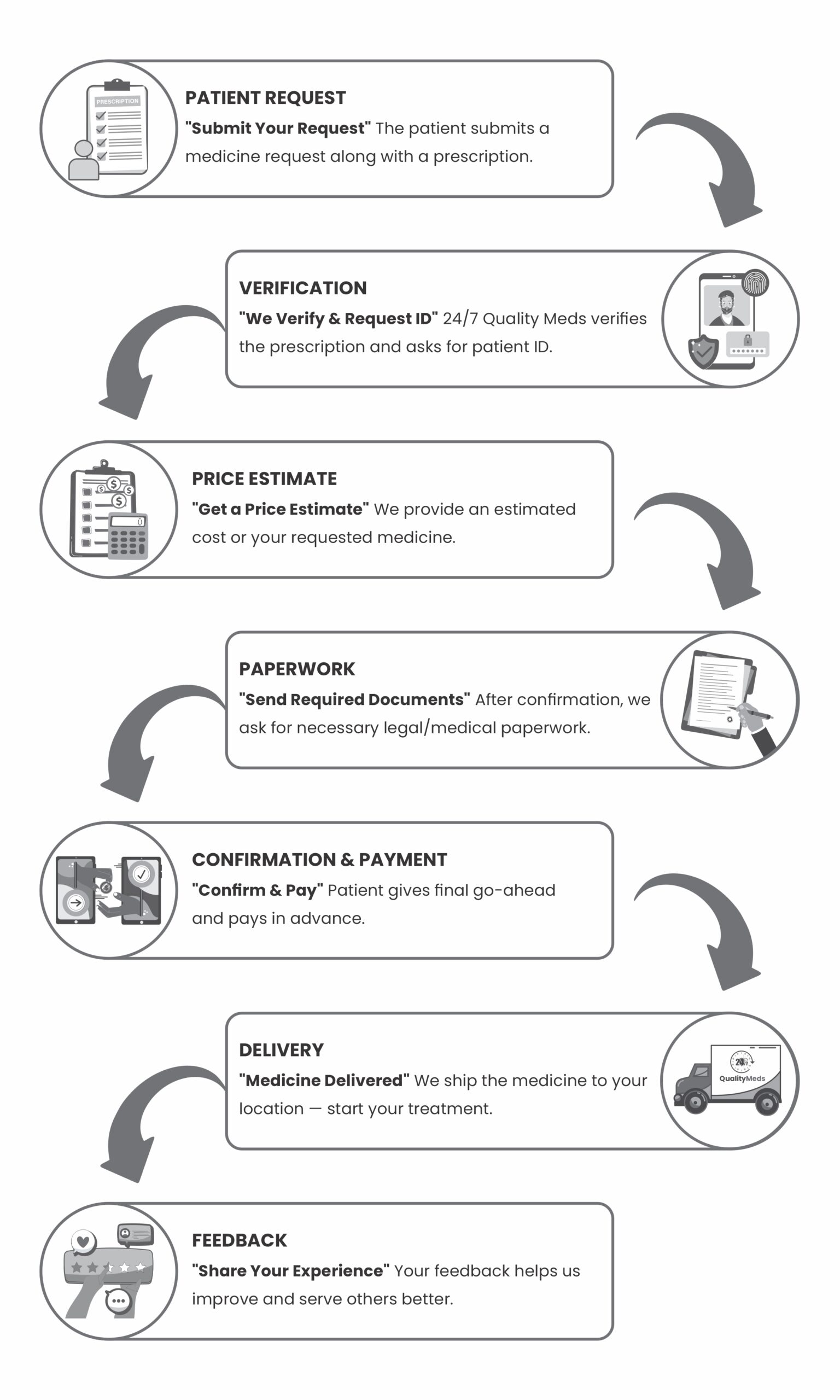
The price of Krazati (Adagrasib) 200 mg tablets in India may vary depending on the supplier, pack size, availability and applicable import-related charges. For the latest price and availability, contact 24/7QualityMeds at +91 99679 79080.
How can I buy Krazati (Adagrasib) in India, and how can I enquire about its price?
Patients looking to buy Krazati (Adagrasib) in India can contact 24/7QualityMeds at +919 967979080 to enquire about the latest price and product availability. Share the prescribed strength and relevant prescription details with the team to check available supply options and applicable documentation requirements.
Where can I buy Krazati in Delhi?
Patients looking to buy Krazati (Adagrasib) in Delhi can contact 24/7QualityMeds through the product enquiry page to enquire about the latest price, product availability and supply requirements. Prescription details may be required.
How can I buy Krazati in Mumbai?
Patients looking to buy Krazati (Adagrasib) in Mumbai can contact 24/7QualityMeds at +91 99679 79080 or through the product enquiry page to enquire about the latest price and product availability. Prescription details may be required.