Ponatinib (Iclusig) targets the proteins that drive leukemia, helping to stop the further growth of cancer cells.
Ponatinib
Generic Name/API:Ponatinib
Packaging:Iclusig is available in 15 mg and 45 mg tablets. The 15 mg tablets are available in bottles of 60 and 180 tablets, while the 45 mg tablets are available in bottles of 30 and 90 tablets.
Storage:Iclusig tablets should be stored at 20° to 25°C (68° to 77°F)
Dosage:For dosage information, please visit the General Information section.
Strength:Tablets: 15 mg and 45 mg
Indication:Iclusig is indicated for the treatment of adult patients with chronic phase, accelerated phase, or blast phase chronic myeloid leukemia (CML) that is resistant or intolerant to prior tyrosine kinase inhibitor therapy or Philadelphia chromosome positive acute lymphoblastic leukemia (Ph+ALL) that is resistant or intolerant to prior tyrosine kinase inhibitor therapy.
Ponatinib (Iclusig) is a kinase inhibitor indicated for the treatment of adults with:
- Chronic, accelerated, or blast-phase chronic myeloid leukemia (CML) that is resistant or intolerant to prior tyrosine kinase inhibitor therapy.
- Philadelphia chromosome-positive acute lymphoblastic leukemia (Ph+ ALL) that is resistant or intolerant to prior tyrosine kinase inhibitor therapy.
Strength:
Tablets – 15 mg and 45 mg
Dosage:
The recommended dose and schedule for Iclusig is 45 mg administered orally once daily. Continue treatment as long as the patient does not show evidence of disease progression or unacceptable toxicity. Iclusig may be taken with or without food.
Adverse Effects:
- Hypertension
- Rash
- Abdominal pain
- Fatigue
- Headache
- Dry skin
- Constipation
- Arthralgia
- Nausea
- Pyrexia.
- Hematologic adverse reactions included thrombocytopenia, anemia, neutropenia, lymphopenia, and leukopenia
Storage:
Iclusig tablets should be stored at 20° to 25°C (68° to 77°F); excursions permitted to 15°to 30° C (59° to 86° F).Keep away from children.
- Thrombosis and Thromboembolism
Iclusig may cause arterial thrombosis and venous thromboembolism. Symptoms of Arterial Thrombosis such as cardiovascular, cerebrovascular, and peripheral vascular thrombosis, including fatal myocardial infarction and stroke have occurred in Iclusig-treated patients. Interrupt and consider discontinuation of Iclusig in patients who develop arterial thrombotic events.
Venous thromboembolic events, including deep venous thrombosis, pulmonary embolism, portal vein thrombosis, and retinal vein thrombosis can occur in patients treated with Iclusig. Consider dose modification or discontinuation of Iclusig in patients who develop serious venous thromboembolism.
- Hepatotoxicity
Hepatotoxicity may result in liver failure and death in Iclusig-treated patients. Aspartate aminotransferase (ALT) or alanine aminotransferase (AST) elevation can also occur in these patients. Monitor liver function tests at baseline, at least monthly or as clinically indicated. Interrupt, reduce or discontinue Iclusig as clinically indicated.
- Congestive Heart Failure
Iclusig-treated patients may show serious congestive heart failure or left ventricular dysfunction. Monitor patients for signs or symptoms consistent with congestive heart failure and treat as clinically indicated, including interruption of Iclusig. Consider discontinuation of Iclusig in patients who develop serious congestive heart failure
- Hypertension
A serious side-effect such as treatment-emergent symptomatic hypertension including hypertensive crisis may occur in patients taking Iclusig. They require urgent clinical intervention for hypertension associated with confusion, headache, chest pain, or shortness of breath. Also, monitor and manage blood pressure elevations.
- Pancreatitis
Use of Iclusig may cause clinical pancreatitis. The occurrence of treatment-emergent lipase elevation may be expected. Check serum lipase every 2 weeks for the first 2 months and then monthly thereafter or as clinically indicated. Consider additional serum lipase monitoring in patients with a history of pancreatitis or alcohol abuse. Dose interruption or reduction may be required. In cases where lipase elevations are accompanied by abdominal symptoms, interrupt treatment with Iclusig and evaluate patients for pancreatitis. Do not consider restarting Iclusig until patients have complete resolution of symptoms and lipase levels are less than 1.5 x ULN.
- Hemorrhage
Some of the most commonly reported serious bleeding events in patients taking Iclusig are cerebral hemorrhage and gastrointestinal hemorrhage were the most commonly reported serious bleeding events. Interrupt Iclusig for serious or severe hemorrhage.
- Fluid Retention
Iclusig-treated patients may suffer with the most common fluid retention events that includes peripheral edema, pleural effusion, and pericardial effusion. Monitor patients for fluid retention and manage patients as clinically indicated. Interrupt, reduce, or discontinue Iclusig as clinically indicated
- Cardiac Arrhythmias
Iclusig has the potential to cause symptomatic bradyarrhythmias and supraventricular tachyarrhythmias. The possible symptoms of symptomatic bradyarrhythmias include complete heart block, sick sinus syndrome, and atrial fibrillation with bradycardia and pauses. Whereas the symptoms of supraventricular tachyarrhythmias may include atrial fibrillation, atrial flutter, supraventricular tachycardia, and atrial tachycardia. Advise patients to report signs and symptoms suggestive of slow heart rate (fainting, dizziness, or chest pain) and also of rapid heart rate (palpitations, dizziness).
- Myelosupression
Severe type (grade 3 and 4) can occur with patients receiving Iclusig. Obtain complete blood counts every 2 weeks for the first 3 months and then monthly or as clinically indicated, and adjust the dose as recommended.
- Tumor Lysis Syndrome (TLS)
The potential for TLS is high in AP-CML, BP-CML, or Ph+ ALL, so make sure they maintain adequate hydration and treat high uric acid levels prior to initiating Iclusig therapy.
- Compromised Wound Healing and Gastrointestinal Perforation
Iclusig could compromise wound healing and Serious gastrointestinal perforation (fistula). Interrupt Iclusig for at least 1 week prior to major surgery. Resumption of Iclusig after surgery should be based on adequate wound healing.
FAQ
What are the dosing instructions for this medication?
The recommended dose and schedule for Iclusig (Ponatinib) is 45 mg administered orally once daily. Continue treatment as long as the patient does not show evidence of disease progression or unacceptable toxicity. Iclusig may be taken with or without food. Tablets should be swallowed whole.
What signs of bleeding should I watch for?
Cerebral hemorrhage and gastrointestinal hemorrhage were the most commonly reported serious bleeding events. Monitor these symptoms and interrupt Iclusig for serious or severe hemorrhage.
When should I seek medical help for high blood pressure?
These patients require urgent clinical intervention for hypertension associated with confusion, headache, chest pain, or shortness of breath.
What is the price of Iclusig (Ponatinib) in India?
The price of Iclusig (Ponatinib) in India may vary based on currency fluctuations, import duties, and applicable charges. For pricing details, contact 247QualityMeds at +91-9967979080.
How can I buy Ponatinib (Iclusig) tablets online in India?
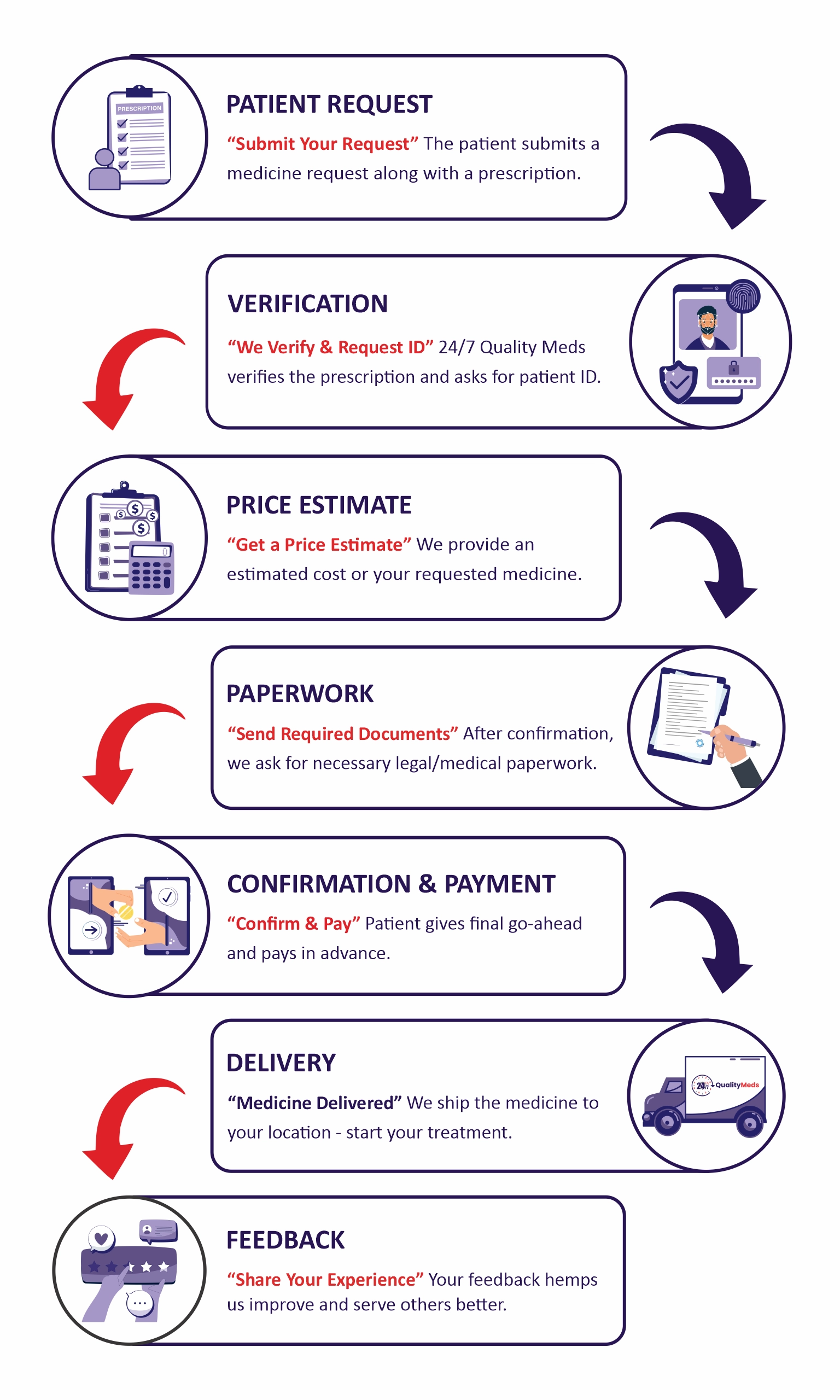
To buy Ponatinib (Iclusig) tablets online in India, a valid prescription is required. Contact 247QualityMeds to proceed with the prescription-based procurement of the medicine.
Where can I buy Ponatinib (Iclusig) in Mumbai?
24/7QualityMeds supplies Ponatinib (Iclusig) in Mumbai by sourcing it directly from the manufacturer’s original sources and handles the import documentation required for delivery to the patient.