Ibtrozi is used to treat adults with ROS1-positive non-small cell lung cancer (NSCLC) that has spread or cannot be removed by surgery, especially if previous treatments have failed.
Taletrectinib

Generic Name/API:Taletrectinib
Packaging:Bottle of 30 capsules in a carton containing three bottles of 30 count for a total of 90 capsules per carton
Storage:Store at 20°C to 25°C
Dosage:For dosage information, please check the General Information section.
Strength:Capsules: 200 mg of taletrectinib
Indication:Ibtrozi is a next-generation oral targeted therapy that represents a significant advancement in precision medicine for specific types of cancer. It functions as a highly selective tyrosine kinase inhibitor (TKI) specifically designed to target oncogenic ROS1 and NTRK gene fusions.
Ibtrozi (taletrectinib) is a kinase inhibitor indicated for the treatment of adult patients with locally advanced or metastatic ROS1-positive non-small cell lung cancer (NSCLC). Taletrectinib is now a preferred treatment for advanced ROS1-positive NSCLC, including brain metastases and resistance mutations, per updated NCCN guidelines. (JUNE 2025)
STRENGTH:
Capsules: 200 mg of taletrectinib
DOSAGE:
600 mg orally once daily on an empty stomach (no food intake at least 2 hours before and 2 hours after taking Ibtrozi)
Dose Reduction :
| Dosage Reduction | Recommended Dosage |
| First dose Reduction | 400mg OD |
| Second dose Reduction | 200mg OD |
| Permanently discontinue | For patients not able to tolerate less then 200 mg |
SIDE EFFECTS:
- Neurological: Dizziness, cognitive dysfunction, mood changes, peripheral neuropathy.
- Visual: Blurred vision, double vision, visual impairment
- Gastrointestinal: Nausea, vomiting, diarrhea, constipation, decreased appetite
- Fatigue: Feeling tired or weak
- Musculoskeletal: Muscle pain, joint pain
- Skin: Rash, itching
- Edema: Swelling, particularly in the ankles and feet
- Anemia: Low red blood cell count
- Elevated Liver Enzymes: As mentioned above, can be detected through blood tests.
ADVERSE REACTIONS :
- Hepatotoxicity :
88% of patients treated with Ibtrozi experienced increased aspartate aminotransferase (AST), including 10% Grade 3 or 4. Increased alanine aminotransferase (ALT) occurred in 85% of patients treated with Ibtrozi, including 13% Grade 3 or 4. The median time to first onset of AST or ALT elevation was 15 days (range: 3 days to 20.8 months)
- Interstitial Lung Disease/Pneumonitis:
Interstitial lung disease (ILD)/pneumonitis occurred in 2.3% of patients treated with Ibtrozi, including Grade 3 or 4 in 1.1% of patients. The median time to first onset of ILD/pneumonitis was 3.8 months (range: 12 days to 11.8 months)
- QTc Interval Prolongation :
351 patients who underwent at least one post baseline ECG assessment, 13% experienced an increase in QTcF of >60 msec compared to baseline after receiving Ibtrozi and 2.6% had an increase in QTcF to >500 msec. Overall, 3.4% of patients had Grade ≥3 QTc interval prolongation. The median time from the first dose of Ibtrozi to the onset of ECG QT prolongation was 22 days (range: 1 day to 38.7 months)
- Hyperuricemia
14% of patients treated with Ibtrozi experienced hyperuricemia reported as an adverse reaction, with 16% of these patients requiring urate-lowering medication without pre-existing gout or hyperuricemia. Hyperuricemia Grade ≥3 occurred in one patient. The median time to first onset of hyperuricemia was 2.1 months (range: 7 days to 35.8 months).
- Myalgia with Creatine Phosphokinase Elevation
Myalgia occurred in 10% of patients treated with Ibtrozi. The median time to first onset of myalgia was 11 days (range: 2 days to 10 months)
- Skeletal fractures
3.4% of patients experienced fractures including 1.4% Grade 3. Some fractures occurred in the setting of an accidental fall or other predisposing factors such as osteoporosis, bone metastasis, and age-related degenerative conditions. Fractures involved the ribs (1.4%), spine (0.9%), femur (0.6%), humerus (0.3%), and acetabulum (0.3%). The median time to first onset of fracture was 10.7 months (range: 26 days to 29.1 months).
STORAGE :
- Store at 20°C to 25°C
- Neurological Adverse Reactions: Ibtrozi can cause neurological side effects, including dizziness, cognitive dysfunction (difficulty thinking or concentrating), mood changes, and even seizures.
- QTc Interval Prolongation: Ibtrozi can prolong the QTc interval, a measure of the heart’s electrical activity. This can increase the risk of a potentially dangerous heart rhythm abnormality called torsades de pointes.
- Visual Impairment: Ibtrozi can cause visual issues such as blurred vision, double vision, and other visual disturbances. It’s important to report any changes in your vision to your doctor promptly as ophthalmic exams may be required.
- Interstitial Lung Disease (ILD)/Pneumonitis: Although rare, Ibtrozi can cause ILD or pneumonitis, which are serious lung conditions. Symptoms may include shortness of breath, cough, and fever.
- Elevated Hepatic Transaminases: Ibtrozi can cause an increase in liver enzymes (hepatic transaminases). Dose adjustments or discontinuation may be necessary if liver enzyme levels become significantly elevated.
- Embryo-Fetal Toxicity: Ibtrozi can harm a developing fetus. Women who are pregnant or could become pregnant should not take Ibtrozi. Effective contraception is crucial for both women and men with female partners of reproductive potential while taking Ibtrozi and for a period of time after the last dose.
- Lactation: It’s not known whether Ibtrozi passes into breast milk. Because of the potential for serious adverse reactions in nursing infants, women should not breastfeed while taking Ibtrozi and for a period of time after the last dose.
FAQ
How does taletrectinib work to treat cancer?
Taletrectinib is a targeted therapy that inhibits ROS1 and NTRK gene mutations, which drive the growth of certain cancers, thereby helping to control tumor progression.
What are the common side effects of Ibtrozi?
Common side effects include fatigue, nausea, diarrhea, liver enzyme elevations, dizziness and swelling. Serious side effects are rare but can include liver problems or neurological symptoms.
How is Ibtrozi administered and what is the recommended dosage?
Ibtrozi is taken orally, usually once daily. The exact dose depends on the patient’s condition and doctor’s instructions; always follow your healthcare provider’s guidance.
Are there any serious side effects or risks associated with taletrectinib?
Yes, serious risks include liver toxicity, neurological issues and allergic reactions. Regular monitoring by your healthcare provider is essential to manage these risks.
Can I take Ibtrozi if I am pregnant or breastfeeding?
It is not recommended for use during pregnancy or breastfeeding due to potential risks to the baby. Discuss with your doctor for safer alternatives.
What is the cost of Ibtrozi (taletrectinib) in India?
The cost of Ibtrozi (taletrectinib) in India varies since it is not yet locally approved and must be imported through legal channels. The final price depends on supplier availability, import duties and international currency fluctuations. For the latest price and supply updates, contact 24/7QualityMeds at +91 9967979080.
How to buy Ibtrozi (taletrectinib) online in India?
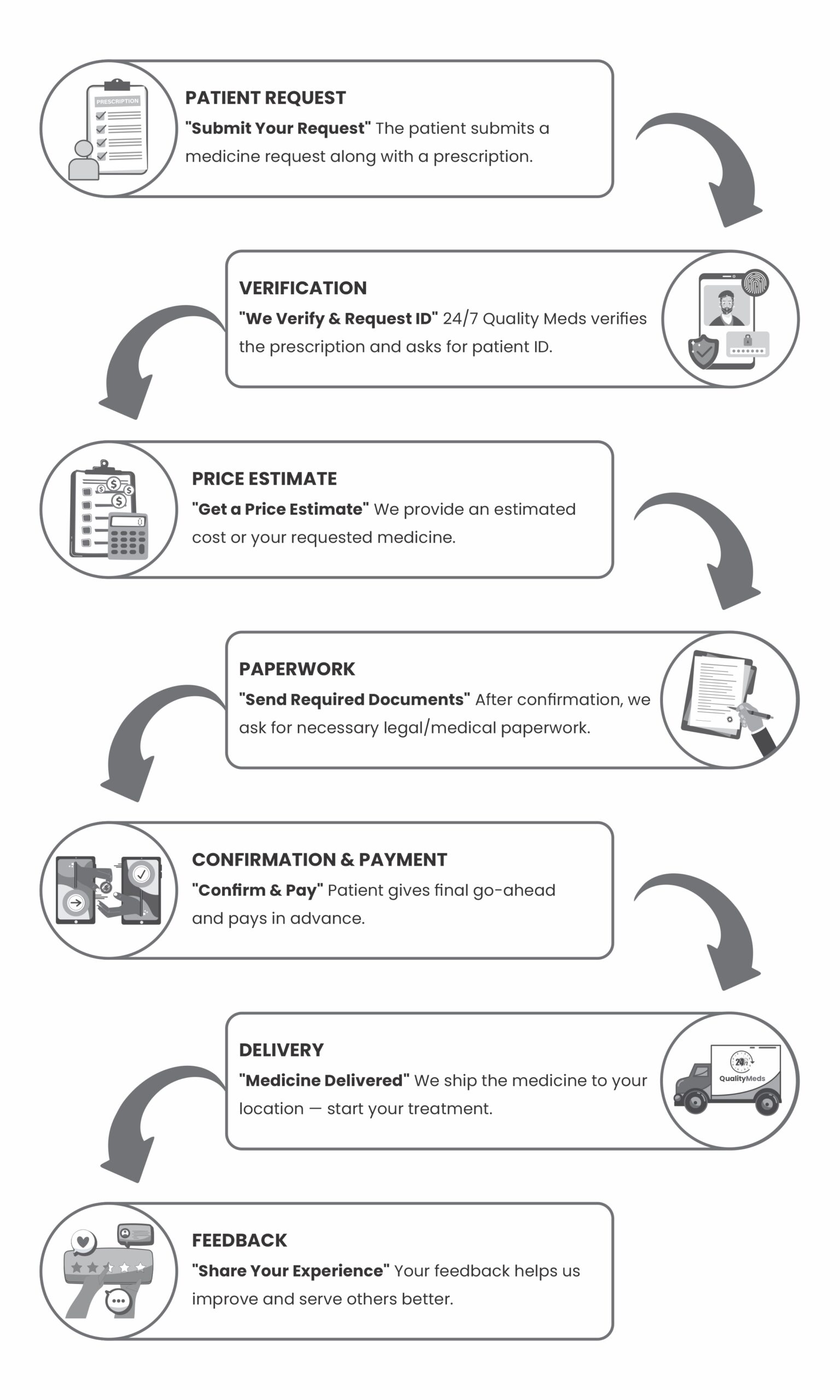
To buy Ibtrozi (taletrectinib) in India safely and at a genuine price, contact 24/7QualityMeds. We assist patients with legal import procedures, prescription verification, sourcing from trusted suppliers and ensuring secure delivery across India.
What are the key criteria for selecting a supplier?
While selecting a supplier, we essentially ensure that the supplier holds a valid Good Distribution Practice (GDP) certificate and possesses a valid operating license. These credentials confirm that the suppliers adherence to International standards for the proper distribution of medicinal product.
How to buy taletrectinib (Ibtrozi) in Delhi?
To buy taletrectinib (Ibtrozi) in Delhi, initiate the process with 24/7QualityMeds through a structured pathway involving prescription verification, regulatory documentation, and regulated import and delivery.
Where can I buy taletrectinib (Ibtrozi) in Mumbai?
24/7QualityMeds supplies taletrectinib (Ibtrozi) in Mumbai by procuring the medicine from genuine, verified sources, managing the required import documentation and arranging secure delivery to the patient.