Fruquintinib is a selective oral small-molecule inhibitor of vascular endothelial growth factor receptors (VEGFR)-1, -2, and -3, used to block tumor angiogenesis.
Fruquintinib
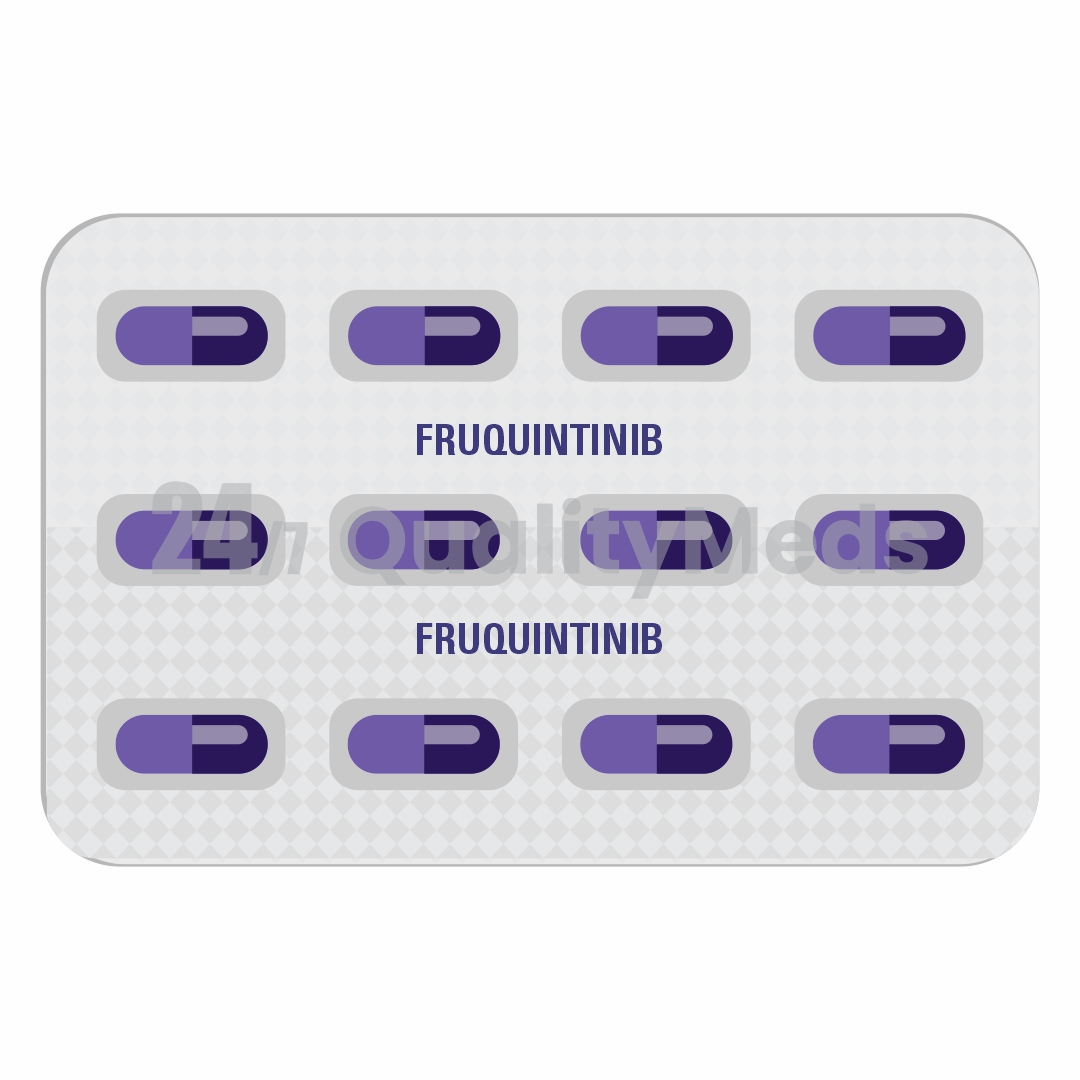
Generic Name/API:Fruquintinib
Packaging:Each bottle contains 21 capsules
Storage:Store at 20°C to 25°C (68°F to 77°F).
Dosage:For dosage information, please check the General Information section.
Strength:Capsules: 1 mg and 5 mg
Indication:Elunate/Fruzaqla (fruquintinib) is a highly selective oral VEGFR inhibitor with potent activity against VEGFR-1, -2, and -3, leading to strong anti-angiogenic effects. It offers targeted efficacy in previously treated metastatic colorectal cancer (mCRC), including patients who have exhausted standard chemotherapy and biologic options. With its favorable selectivity profile, Fruzaqla provides an effective and well-tolerated treatment option in late-line mCRC management.
Elunate/Fruzaqla (fruquintinib) is a novel, oral, small-molecule kinase inhibitor designed to selectively block VEGFR-1, -2, and -3, thereby suppressing tumor angiogenesis. Preclinical studies demonstrated its ability to inhibit VEGF-mediated endothelial proliferation, signaling, and tumor growth. Clinically, Fruzaqla is indicated for adults with metastatic colorectal cancer who have progressed after standard therapies, including fluoropyrimidine, oxaliplatin and irinotecan based therapy; anti-VEGF, as well as, anti-EGFR agents.
STRENGTH :
Capsules: 1 mg and 5 mg
DOSAGE:
The recommended dose of Fruzaqla is 5 mg orally once daily, with or without food for the first 21 days of each 28-day cycle until the disease progresses or if unacceptable toxicity is reported.
Dosage modifications for adverse reactions:
- First dose reduction: 4 mg orally once daily
- Second dose reduction: 3 mg orally once daily
- Permanently discontinue for patients who are unable to tolerate 3 mg orally once daily.
SIDE EFFECTS:
Following are the clinically significant adverse reactions associated with fruquintinib use:
- Hypertension
- Hemorrhagic Events
- Infections
- Gastrointestinal Perforation
- Hepatotoxicity
- Proteinuria
- Palmar-Plantar Erythrodysesthesia (PPE)
- Posterior Reversible Encephalopathy Syndrome (PRES)
- Others include: voice changes or hoarseness, diarrhea, stomach ache, weakness, asthenia, etc.
STORAGE :
Store at 20°C to 25°C (68°F to 77°F). Brief exposure to 15°C and 30°C (59°F to 86°F) permitted.
- Hypertension: Fruquintinib use has reported hypertension in 49% patients with metastatic colorectal cancer. Median time to first onset was 14 days from the first dose of the treatment. Do not initiate treatment before controlling blood pressure adequately. Monitor BP weekly in the first month of dose and monthly thereafter. Antihypertensive therapy can be initiated as deemed appropriate by a physician. Withhold, reduce dose or discontinue treatment permanently based on severity of reaction.
- Hemorrhagic events : In clinical studies, 6% patients reported gastrointestinal hemorrhage. Permanently discontinue if symptoms continue. Monitor international normalised ratio (INR) levels in patients receiving anticoagulants.
- Infections : Fruquintinib use has reportedly been associated with increased risk of infections, most commonly in the urinary tract, upper respiratory tract, pneumonia, etc. Withhold treatment for grade 3 or 4 infection and resume post resolution of infection.
- Gastrointestinal perforation : 1.3% reported gastrointestinal perforation. Permanently discontinue treatment in patients who develop gastrointestinal perforation or fistula.
- Hepatotoxicity: 48% patients in clinical studies showed increased levels of liver enzymes ALT or AST. Monitor liver function tests for ALT, ST, bilirubin before starting treatment and periodically during treatment. Temporarily withhold or reduce or discontinue permanently based on severity and persistence of liver damage.
- Proteinuria : 36% patients involved in clinical studies experienced proteinuria where median time of onset was 22 days from first dose. Monitor for proteinuria and during treatments as well. Temporarily withhold or reduce or discontinue permanently dose based on when symptoms resolve. Discontinue in case of nephrotic syndrome.
- Palmar-Plantar Erythrodysesthesia: PPE reported in 35% of the 911 patients with mCRC in clinical studies, with a median time of onset of 19 days post first dose. Withhold treatment based on severity and resume on resolution.
- Posterior reversible encephalopathy syndrome : MRI may help reveal PRES. An evaluation for PRES in patients presenting seizures, headache, visual disturbances, confusion or altered mental function is required. Discontinue in patients diagnosed with PRES.
- Impaired wound healing : It is advised to avoid administration in patients for at least 2 weeks post major surgery, or till adequate wound healing has taken place. Safety of resuming treatment post resolution of wound healing complication is not yet established.
- Arterial thromboembolic events : Fruquintinib may increase risk of arterial thromboembolic events. Carefully consider treatments for patients with recent history of such events.
- Allergic reactions to dyes : Dyes in the drug include FD&C Yellow No. 5 (tartrazine). These may cause allergic-type reactions in certain susceptible persons.
- Embryo fetal toxicity : Fruquintinib can cause fetal harm based on mechanism of action and animal studies. Advise pregnant women on potential fetal harm, and advise on use of contraception during and for 2 weeks after the last dose.
FAQ
What is fruquintinib used for?
Fruquintinib is used for the treatment of adult patients with metastatic colorectal cancer (mCRC) who have previously received standard chemotherapy and targeted therapies.
What are the common side effects of fruquintinib use?
Hypertension, hemorrhagic events, infections, gastrointestinal perforation, hepatotoxicity, proteinuria, palmar-plantar erythrodysesthesia (PPE), posterior reversible encephalopathy syndrome (PRES), voice changes or hoarseness, diarrhea, stomach ache, weakness, asthenia, etc are some common side effects of fruquintinib use.
Can fruquintinib be used in specific populations i.e. for pregnant, breastfeeding , pediatric and geriatric use?
Fruquintinib can cause fetal harm, and animal studies show potential of teratogenicity, external, visceral and skeletal malformations as well as embryo lethality. No data on use of fruquintinib in pregnant women and hence, advise potential risk to fetus in pregnant women.
What are the key criteria for selecting a supplier?
While selecting a supplier, we essentially ensure that the supplier holds a valid Good Distribution Practice (GDP) certificate and possesses a valid operating license. These credentials confirm that the suppliers adherence to International standards for the proper distribution of medicinal product.
What is the cost of Fruzaqla (fruquintinib) in India?
The cost of Fruzaqla (fruquintinib) capsules in India varies since it is not yet locally registered and often must be imported. Supplier availability, import charges and international currency fluctuations affect the final price. For updated cost details, contact 24/7QualityMeds at +91 9967979080.
How to buy Fruzaqla (fruquintinib) capsules online in India?
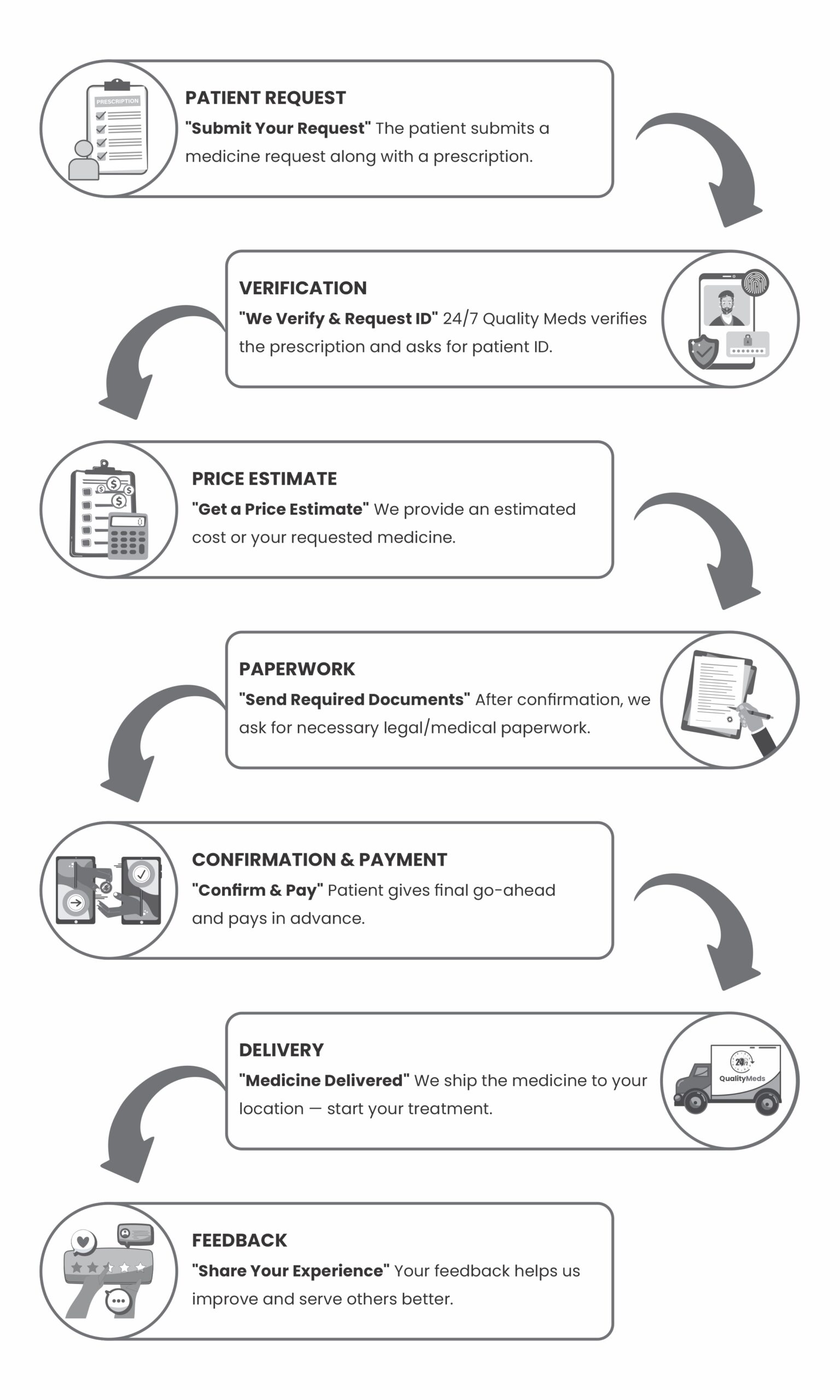
To buy Fruzaqla (fruquintinib) capsules online in India at a genuine price, contact 24/7QualityMeds. We assist with prescription verification, legal import documentation, sourcing from certified suppliers and safe delivery to your address.
How to buy fruquintinib (Elunate/ Fruzaqla) in Delhi?
To buy fruquintinib (Elunate/Fruzaqla) in Delhi, contact 24/7QualityMeds for assistance with prescription verification, legal import procedures, certified international sourcing and secure delivery.
Where can I buy fruquintinib (Elunate/ Fruzaqla) in Mumbai?
To buy fruquintinib (Elunate / Fruzaqla) in Mumbai, connect with 24/7QualityMeds at +91 9967979080 to check its availability across Mumbai.