COLUMVI is used to treat adults with relapsed or refractory diffuse large B-cell lymphoma (DLBCL) after at least two prior lines of treatment.
Glofitamab
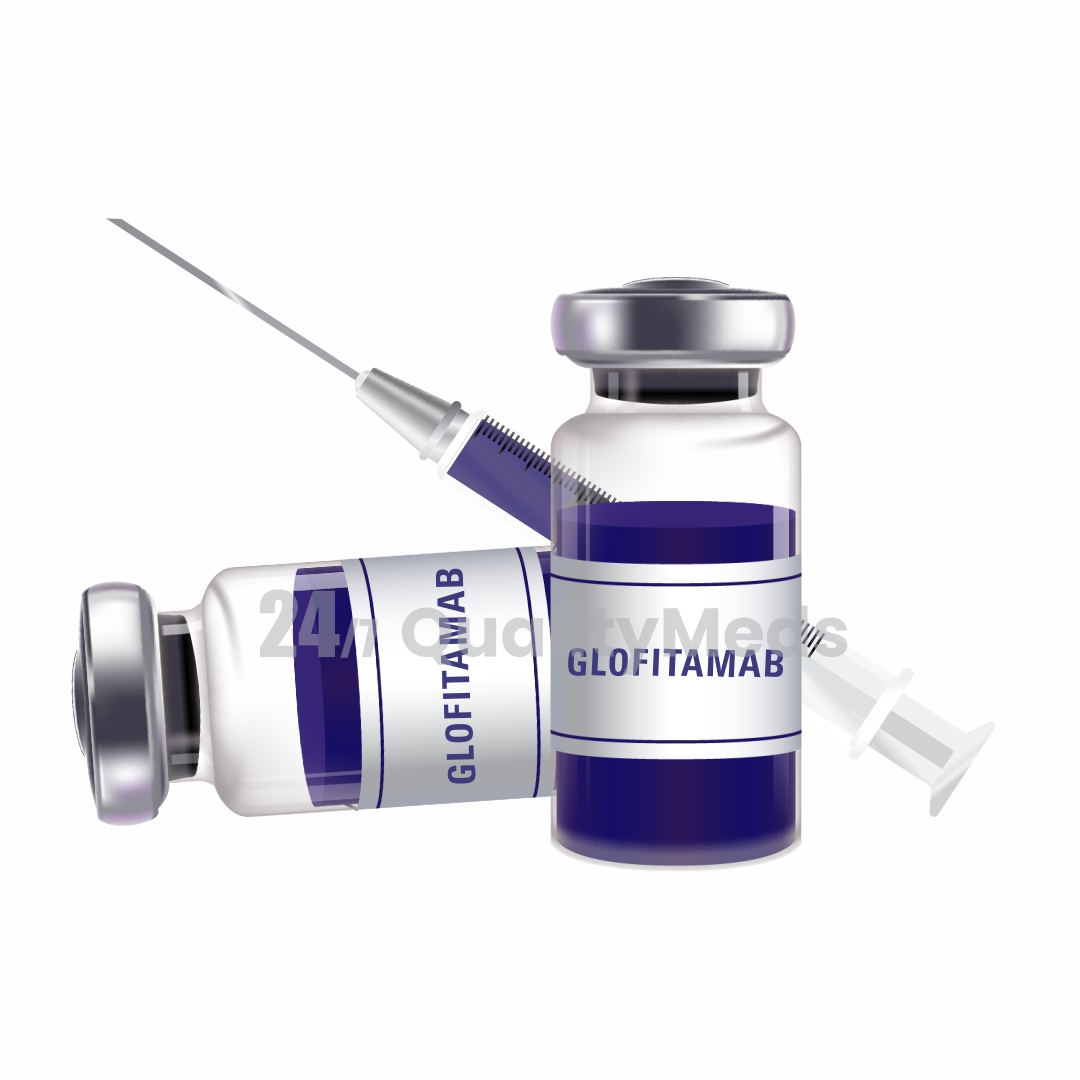
Generic Name/API:Glofitamab
Packaging:One vial/pack
Storage:Store at 2°C to 8°C.
Dosage:For dosage information, please visit the General Information section.
Strength:Injection available in following strengths 2.5 mg/2.5 mL (1 mg/mL) in a single-dose vial 10 mg/10 mL (1 mg/mL) in a single-dose vial.
Indication:COLUMVI (glofitamab-gxbm) is indicated for the treatment of adult patients with relapsed or refractory diffuse large B-cell lymphoma (DLBCL), not otherwise specified, including DLBCL arising from indolent lymphoma, after two or more lines of systemic therapy. This indication is approved under accelerated approval based on response rate.
Columvi (glofitamab) is a novel bispecific antibody that targets CD20 on B cells and CD3 on T cells, effectively directing the immune system to eliminate cancer cells. It has high efficacy in relapsed or refractory diffuse large B-cell lymphoma (DLBCL), with strong overall and complete response rates. Columvi offers a fixed-duration treatment regimen, providing clarity and convenience for both physicians and patients. Approved by both the FDA and the European Commission under accelerated pathways, it is a globally recognized option for difficult-to-treat lymphoma cases. Its step-up dosing approach also ensures a manageable safety profile, particularly in reducing the risk of cytokine release syndrome.
Strength: Columvi is supplied in two strengths 2.5mg and 10mg.
Dosage:
The recommended dosage regimen for Columvi is as follows:
| TREATMENT CYCLE | DAY | DOSE | DURATION OF
INFUSION |
|
| Cycle 1 | Day 1 | Obinutuzumab | ||
| Day 8 | Set-up
dose 1 |
2.5mg | 4hours | |
| Day 15 | Set-up
dose 2 |
10mg | ||
| Cycle 2 | Day 1 | 30mg | 4 Hours | |
| Cycle 3 to 12 | Day 1 | 30mg | 2 Hours | |
Storage: Store refrigerated at 2°C to 8°C, protect from light. Do not freeze.
Adverse reaction:
The following are the adverse reactions seen with Columvi
Cytokine release syndrome
CRS is a condition where the body’s immune system overreacts to a trigger, leading to a rapid and excessive release of inflammatory chemicals called cytokines. Signs of CRS includes fever, rapid heartbeat, low blood pressure, chills, and reduced oxygen levels. In CT it was seen that CRS generally began around 14 hours after infusion and lasted a median of 2 days, resolving in 98% of cases. The highest incidence occurred after the initial 2.5 mg step-up dose, with decreasing frequency following higher doses.
Neurological disorders
COLUMVI may cause serious and potentially fatal neurologic toxicity, including Immune Effector Cell Associated Neurotoxicity Syndrome (ICANS). In clinical trials involving 145 patients, common neurologic side effects included headache (10%), peripheral neuropathy (8%), dizziness or vertigo (7%), and mental status changes (4.8%), such as confusion, disorientation, and delirium. The risk may be increased when COLUMVI is used with other medications that cause dizziness or cognitive changes.
Musculoskelatal pain:
Musculoskeletal pain is a commonly reported adverse effect of COLUMVI in clinical trials. It can involve discomfort in the muscles, joints, bones, or surrounding tissues and may manifest as general body aches, joint stiffness, or localized pain. This type of pain is thought to be related to immune system activation or cytokine release, both of which are known effects of COLUMVI and similar immunotherapies. While the severity is usually mild to moderate, any persistent or worsening musculoskeletal pain should be assessed by a healthcare provider.
COLUMVI carries several serious risks, including cytokine release syndrome (CRS), neurologic toxicity, infections, tumor flare, and embryo-fetal toxicity. CRS occurred in 70% of patients, with severe cases in a small percentage; it typically starts within hours of dosing and can recur. Neurologic toxicities, including serious events like ICANS, were reported in 4.8% of patients, with symptoms such as headaches, dizziness, and altered mental status. Serious or fatal infections, including COVID-19 and sepsis, occurred in 16% of patients. Tumor flare, seen in 12% of patients, may lead to localized pain or organ compression, especially in those with bulky tumors. Additionally, COLUMVI may harm a fetus; therefore, effective contraception is required during treatment and for one month afterward. Close monitoring and adherence to dosing protocols are essential to manage these risks.
FAQ
How is COLUMVI administered?
COLUMVI is given as an intravenous (IV) infusion following a step-up dosing schedule to reduce the risk of cytokine release syndrome (CRS). Treatment is usually done in a hospital or clinic.
What are the serious risks associated with COLUMVI?
COLUMVI can cause:
- Cytokine release syndrome (CRS)
- Neurologic toxicity
- Serious infections
- Tumor flare
Can COLUMVI be administered by pregnant or breastfeeding women?
No. COLUMVI may harm your unborn baby. Avoid pregnancy during treatment and for at least one month after the last dose. It is also not recommended during breastfeeding.
What are the key criteria for selecting a supplier?
While selecting a supplier, we essentially ensure that the supplier holds a valid Good Distribution Practice (GDP) certificate and posssess a valid operating license. These credentials confirm that the suppliers adherence to International standards for the proper distribution of medicinal product.
How do we import shipment?
Shipments are delivered in a validated cold chain box to ensure the medication remains safe and maintains its required temperature throughout transit.
What is the cost of COLUMVI (glofitamab) in India?
Cost of Columvi (glofitamab) may vary each time, as the medicine is not approved in India and must be imported. Factors such as international currency exchange rates (USD/EUR) and import duties can affect the final cost. For more details, please contact 247 QualityMeds.
How to buy COLUMVI (glofitamab) in India?
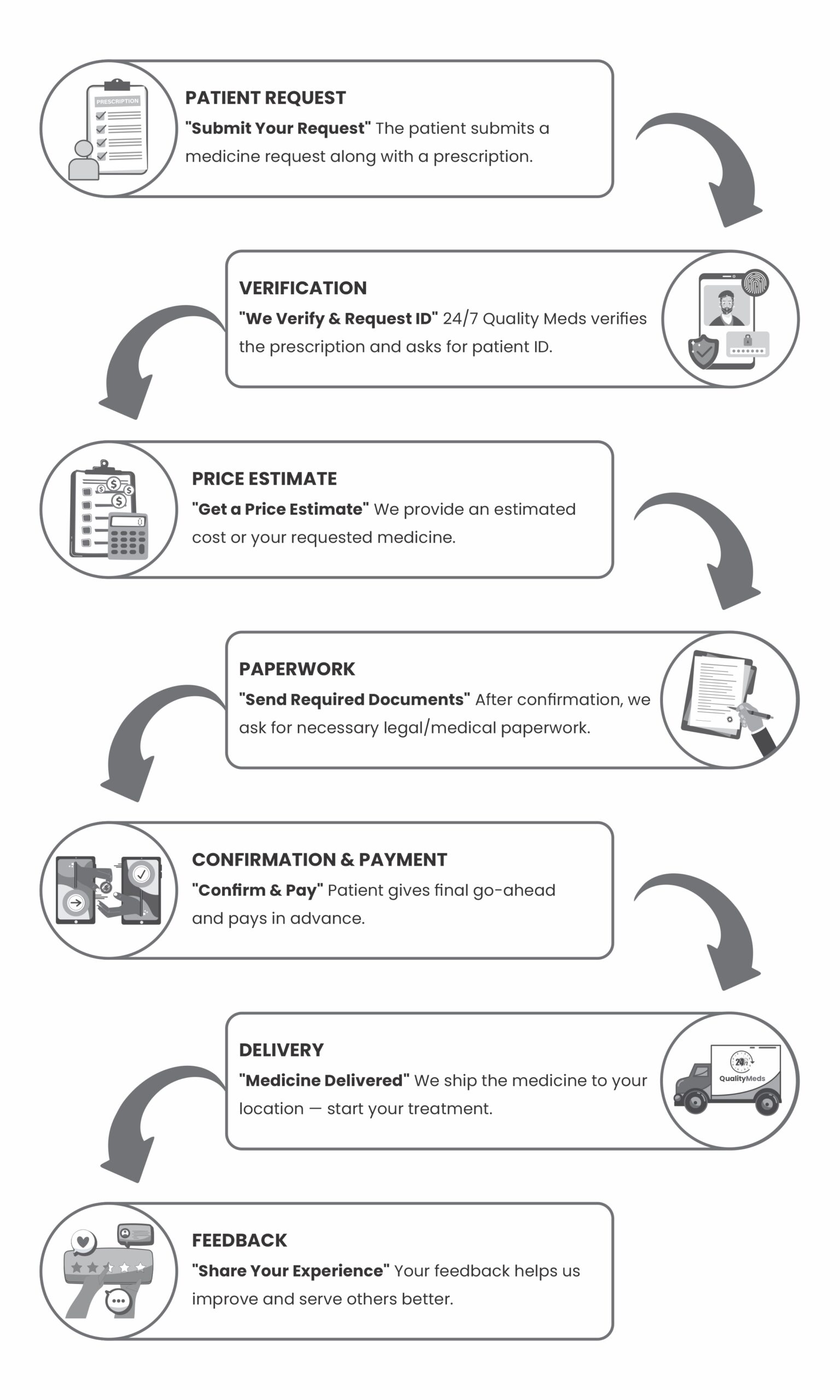
To buy Columvi (Glofitamab) in India at a genuine and affordable price, contact 247 Quality Meds. We help you import Columvi legally with full documentation, ensuring timely delivery and cost efficiency. Call now: 9967979080.
How to buy glofitamab (Columvi) in Delhi?
To buy glofitamab (Columvi) in Delhi, contact 24/7QualityMeds. We oversee the complete access pathway, from validating the prescription and managing regulatory paperwork to sourcing through trusted global partners and arranging compliant delivery.
Where can I buy Glofitamab (Columvi) in Mumbai?
To buy Glofitamab (Columvi) in Mumbai, reach 24/7QualityMeds directly, which manages prescription verification, import compliance and delivery across Mumbai.