Blinatumomab belongs to the group of chemotherapeutic drugs “BiTES” or bispecific T-cell engagers. Blinatumomab particularly is directed to CD19 on B cells and CD3 on T-cells.
Blinatumomab
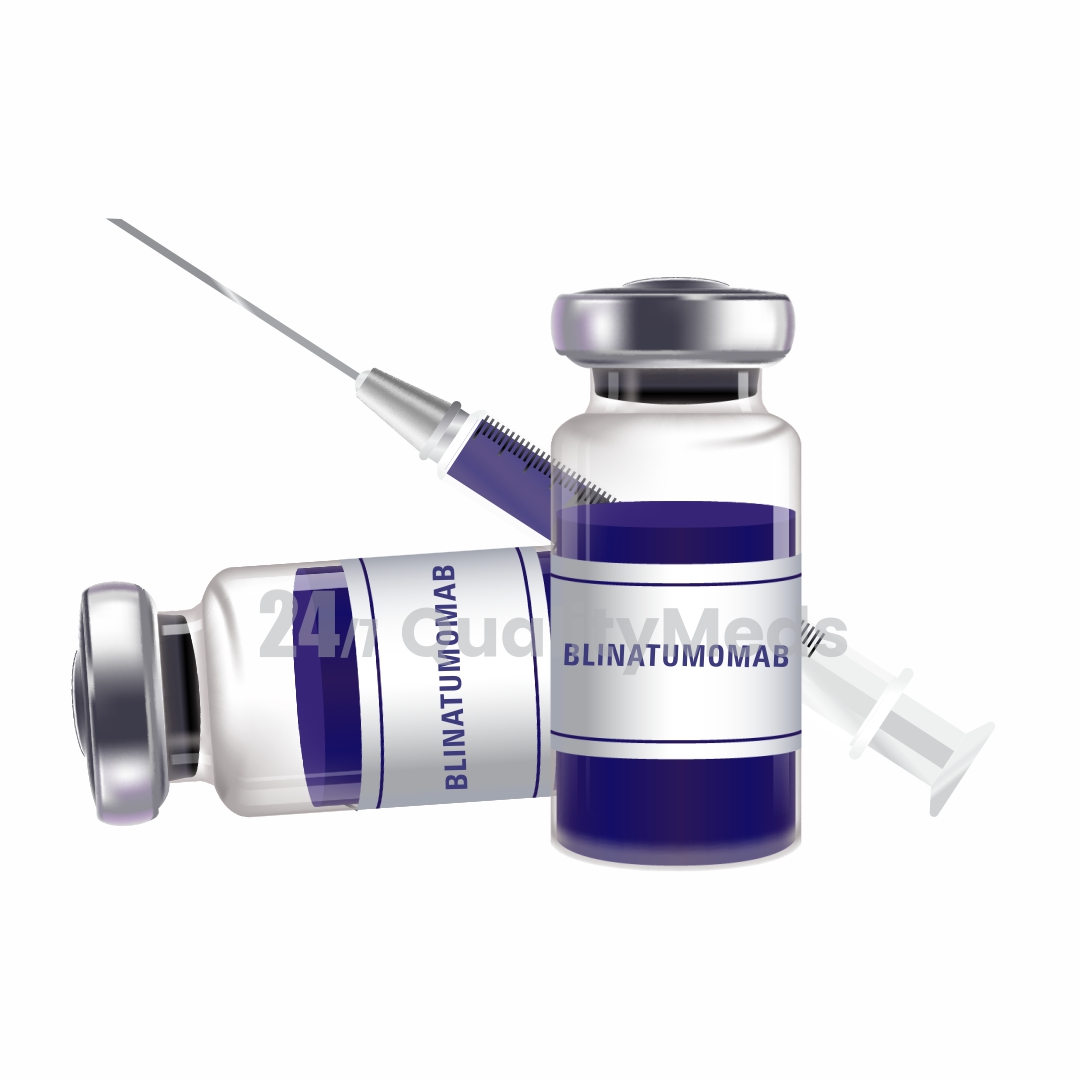
Generic Name/API:Blinatumomab
Packaging:Each Blincyto package contains: One blinatumomab for injection 35 mcg single-dose vial and one IV Solution Stabilizer 10 ml single-dose glass vial.
Storage:2°C to 8°C (36°F to 46°F)
Dosage:For dosage information, please visit the General Information section.
Strength:Each single-dose vial contains 35 mcg blinatumomab.
Indication:Blinatumomab (Blincyto) belongs to the group of chemotherapeutic drugs “BiTES” or bispecific T-cell engagers. Blinatumomab particularly is directed to CD19 on B cells and CD3 on T-cells. This antibody based therapy is produced in CHO cell lines or Chinese hamster ovary cells.
Blincyto (Blinatumomab) belongs to the group of chemotherapeutic drugs “BiTES” or bispecific T-cell engagers. Blinatumomab engages and activates endogenous T-cells as it is particularly directed to CD19 on benign and malignant B cells and CD3in TCR complex on T-cells. This allows formation of a synapse between the T-cell and the tumor cell, thus upregulating cell adhesion molecules, production of cytolytic proteins, release of inflammatory cytokines, and proliferation of T-cells, ultimately resulting in lysis of CD19+ cells. This antibody based therapy is developed in CHO cell lines (Chinese hamster ovary cells).
Blinatumomab is indicated for the treatment of :
- CD19-positive B-cell precursor acute lymphoblastic leukemia (ALL) in first or second complete remission with minimal residual disease (MRD) greater than or equal to 0.1% in adult and pediatric patients one month and older.
- Relapsed or refractory CD19-positive B-cell precursor acute lymphoblastic leukemia (ALL) in adult and pediatric patients one month and older.
- CD19-positive Philadelphia chromosome-negative B-cell precursor acute lymphoblastic leukemia (ALL) in the consolidation phase of multiphase chemotherapy in adult and pediatric patients one month and older.
STRENGTH:
- Each single-dose vial contains 35 mcg blinatumomab.
DOSAGE:
- A treatment course consists of 1 cycle of blinatumomab for induction followed by up to 3 additional cycles for consolidation.
- A single cycle of treatment of blinatumomab induction or consolidation consists of 28 days of continuous intravenous infusion, followed by a 14-day treatment-free interval. Hence, 42 days of treatment overall.
SIDE EFFECTS:
Adverse reactions include:
- Cytokine Release Syndrome
- Neurological Toxicities, including Immune Effector Cell-Associated Neurotoxicity Syndrome
- Infections
- Tumor Lysis Syndrome
- Neutropenia and Febrile Neutropenia
- Effects on Ability to Drive and Use Machines
- Elevated Liver Enzymes
- Pancreatitis
- Leukoencephalopathy
STORAGE:
- Store blinatumomab and IV Solution Stabilizer vials in the original package refrigerated at 2°C to 8°C (36°F to 46°F).
- Protect from light until time of use.
- Do not freeze.
- Vials may be stored for a maximum of 8 hours at room temperature [23°C to 27°C (73°F to 81°F)] in the original carton to protect from light.
1. Cytokine release syndrome (reported in 7-15% cases in CT)
Cytokine Release Syndrome (CRS), potentially detrimental and lethal, is seen in patients receiving Blincyto treatment. CRS onset usually happens 2 days (median time) after starting blinatumomab infusion and takes 5 days (median time) to resolve, in cases that it actually got resolved. CRS manifests as fever, nausea, headache, athenia, hypotension, increased levels of of alanine aminotransferase (ALT), aspartate aminotransferase (AST), and total bilirubin, as well as disseminated intravascular coagulation (DIC). After treatment, the manifestation may overlap with those of infusion reactions, capillary leak syndrome (CLS), and hemophagocytic histiocytosis/macrophage activation syndrome (MAS).
2. Neurological Toxicities (reported in 65% cases in CT, ICANS in 7.5% cases in CT)
BLINCYTO can cause serious or life-threatening neurologic toxicity, including ICANS or Immune Effector Cell-Associated Neurotoxicity Syndrome. Neurologic toxicities observed within the first 2 weeks of receiving treatment.
Common manifestations :
- headache
- tremor
- neurological toxicity profile varied by age group
Approximately 13% patients showed grade 3 or higher grades of neurological toxicities like
- encephalopathy
- convulsions
- speech disorders
- disturbances in consciousness
- confusion
- disorientation
- coordination and balance disorders
Most showed resolution post discontinuation or interruption of treatment.
Patients with a history or presence of clinically relevant CNS pathology were not included in clinical trials.
Patients with Down Syndrome may have a higher risk of seizures with this therapy; and are advised to consider seizure prophylaxis prior to initiation of treatment.
3. Infections (observed in approx. 25% of the patients)
Infections (some of which were life threatening or fatal) such as sepsis, pneumonia, bacteremia, opportunistic infections, and catheter-site infections were observed in patients with ALL under blinatumomab treatment.
4. Tumor lysis syndrome (TLS),
- Life-threatening or fatal, has been observed in patients receiving blinatumomab.
- Pretreatment cytoreduction and on treatment hydration advised as prophylactic measures.
5. Neutropenia and febrile neutropenia
- Life threatening, has been observed in some patients receiving this treatment.
- Strict monitoring of laboratory parameters some of which may be white blood cell count, and absolute neutrophil count during blinatumomab infusion.
- Interrupt treatment in case of prolonged neutropenia.
6. Effects on ability to drive and use machines
- Patients undergoing blinatumomab therapy may be at risk for loss of consciousness due to neurological toxicities.
- Patients are advised to avoid driving, engaging in hazardous occupations or activities, handling heavy and dangerous machinery while undergoing treatment with blinatumomab.
7. Elevated liver enzymes
- Transient elevations in liver enzymes associated with this therapy.
- In patients with ALL receiving this treatment in clinical trials, the median time to onset of elevated liver enzymes was 3 days, most of them being observed in the setting of CRS.
- For the events observed outside a background of CRS, the median time to onset was 19 days.
- Grade 3 or greater elevations in liver enzymes occurred in approximately 7% of patients outside the setting of CRS and resulted in treatment discontinuation in less than 1% of patients.
8. Pancreatitis
- Fatal pancreatitis has been reported in patients receiving blinatumomab in combination with dexamethasone in clinical trials and the postmarketing setting.
- Evaluate patients with signs and symptoms of pancreatitis.
- Management of pancreatitis may require either temporary interruption or discontinuation of both therapies – blinatumomab and dexamethasone.
9. Leukoencephalopathy
- Patients receiving blinatumomab therapy, especially those with background of cranial irradiation and antileukemic chemotherapy (including systemic high-dose methotrexate or intrathecal cytarabine) showed cranial magnetic resonance imaging (MRI) changes indicating leukoencephalopathy. Clinical significance unknown.
10. Immunization
- Safety of administering live viral vaccines ( attenuated vaccines) during blinatumomab therapy not studied. Hence, to avoid risk, live viral vaccines are recommended against for at least 2 weeks before starting of this treatment, during treatment and until complete recovery of the immune system after the last dose of blinatumomab.
11. Benzyl alcohol toxicity in neonates
- Serious/fatal reactions, including “gasping syndrome” seen in some high risk groups.
- High-risk groups include very low birth weight neonates born <1500 g and infants <34 weeks gestation who have already received the intravenous =s drugs that benzyl alcohol as preservative.
Important symptoms include:
- CNS depression
- Metabolic acidosis
- Gasping
- Neurologic deterioration
- Other symptoms include seizures, hemorrhage, hematologic issues, skin breakdown, hepatic/renal failure, hypotension, bradycardia, cardiovascular collapse.
- Recommended to use formulations devoid of preservatives. Monitoring for metabolic acidosis. 72-, 96-hour, or 7-day infusions in patients <5.4 kg are advised against.
12. Embryo fetal toxicity
- Blinatumomab may cause fetal harm when administered to a pregnant woman.
- Advise pregnant women of the potential risk to the fetus and to use effective contraception during treatment and for 48 hours after the last dose of blinatumomab.
Monitoring and management –
- Monitor patients receiving blinatumomab treatment for signs and symptoms and in case such signs are visible, contact healthcare professionals.
- Management of such syndromes and toxicities may require interruption or permanent discontinuation of treatment as recommended and/or treatment with corticosteroids.
- As appropriate, administer prophylactic antibiotics and employ surveillance testing during treatment with blinatumomab, for TLS and infections.
- Monitor alanine aminotransferase (ALT), aspartate aminotransferase (AST), gamma-glutamyl transferase (GGT), and total blood bilirubin prior to the start of and during treatment.
- Interrupt therapy if the levels of transaminases rise to greater than 5 times the upper limit of normal or if total bilirubin rises to more than 3 times the upper limit of normal.
- Errors in preparation and administration of infusion reported previously with this therapy. Hence, instructions for admixing and administration are to be strictly followed to minimise errors that may affect efficacy of medication, and avoid overdose or underdose
FAQ
What is the cost of Blincyto in India?
Cost of Blincyto may vary each time, as the medicine is not approved in India and must be imported. Factors such as international currency exchange rates (USD/EUR) and import duties can affect the final cost. For more details, please contact 247 QualityMeds.
What is Blincyto used for?
Blinatumomab or BLINCYTO is mainly used for treatment of CD19-positive B-cell precursor acute lymphoblastic leukemia (ALL), relapsed or refractory CD19-positive B-cell precursor acute lymphoblastic leukemia (ALL), and CD19-positive Philadelphia chromosome-negative B-cell precursor acute lymphoblastic leukemia (ALL).
What are the common side effects of blinatumomab use?
Cytokine release syndrome, neurological toxicities, including ICANS (immune effector cell-associated neurotoxicity syndrome), infections, tumor lysis syndrome, neutropenia and febrile neutropenia, effects on ability to drive and use machines, elevated liver enzymes, pancreatitis, leukoencephalopathy.
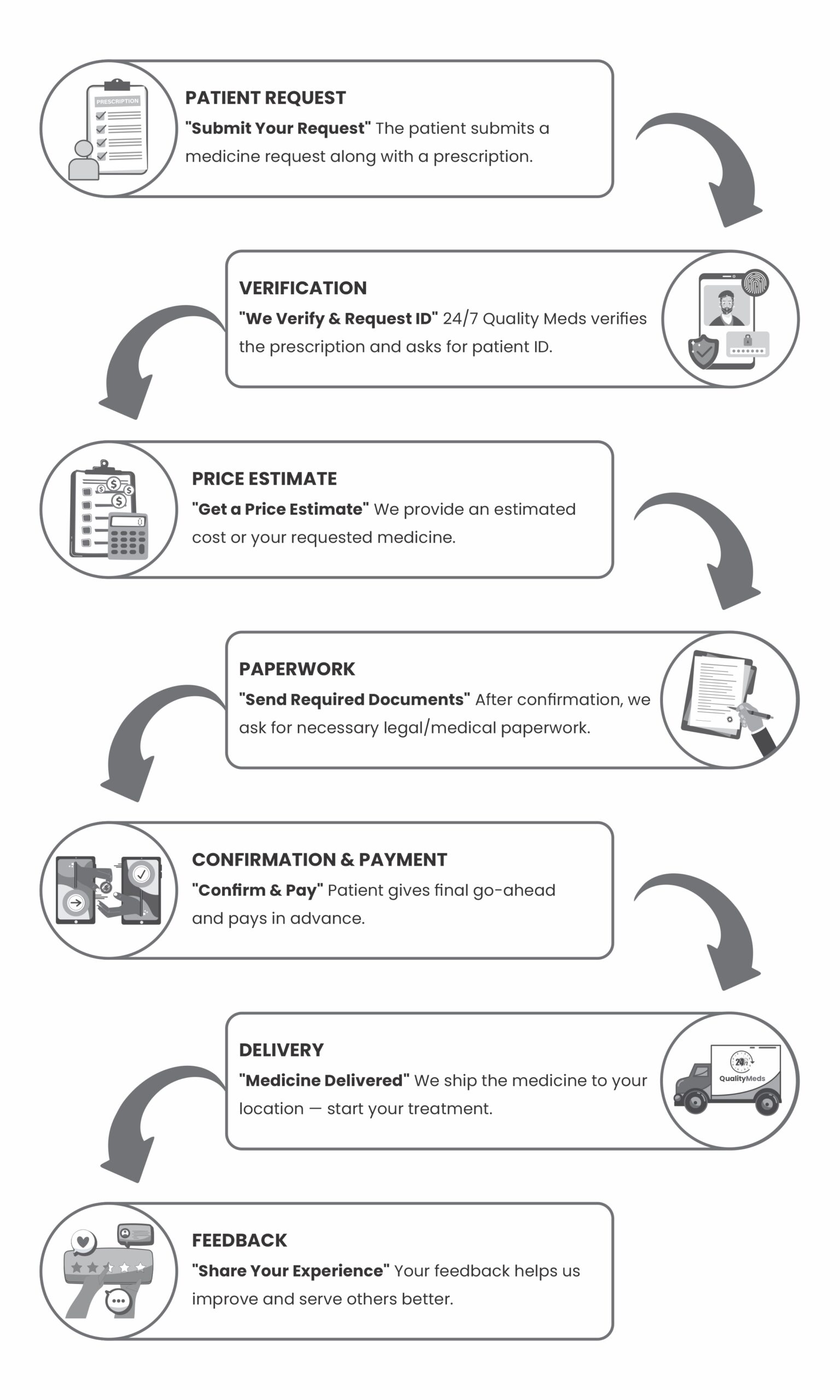
How to Buy Blincyto (Blinatumomab) Injection at a genuine price?
To buy Blincyto (Blinatumomab) in India in genuine rate, contact 247 Quality Meds. We assist you in importing this medication legally and at the best possible price.